Multimedia Performance_Affective Encounter of Body, Wonder and Machines
26. May 2026
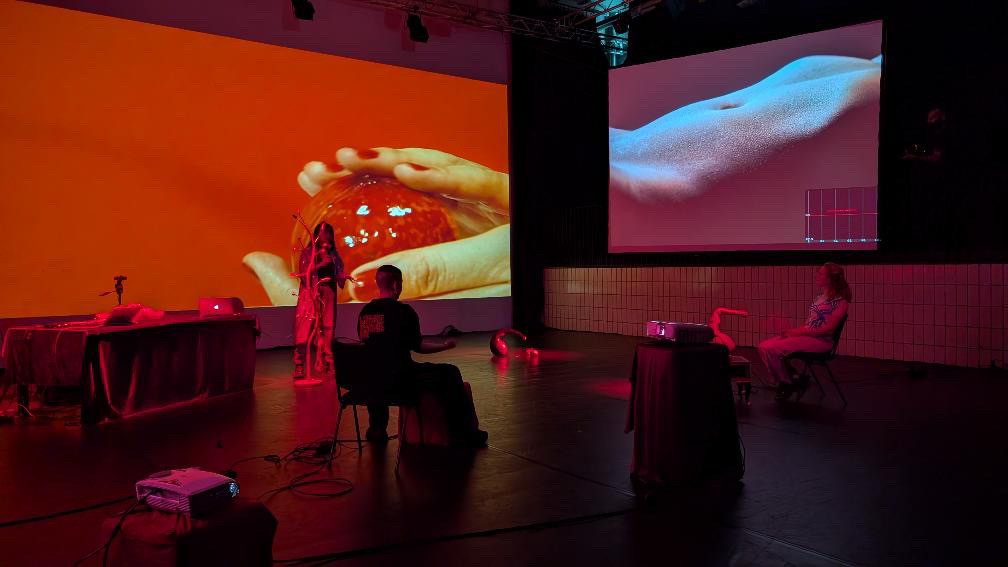

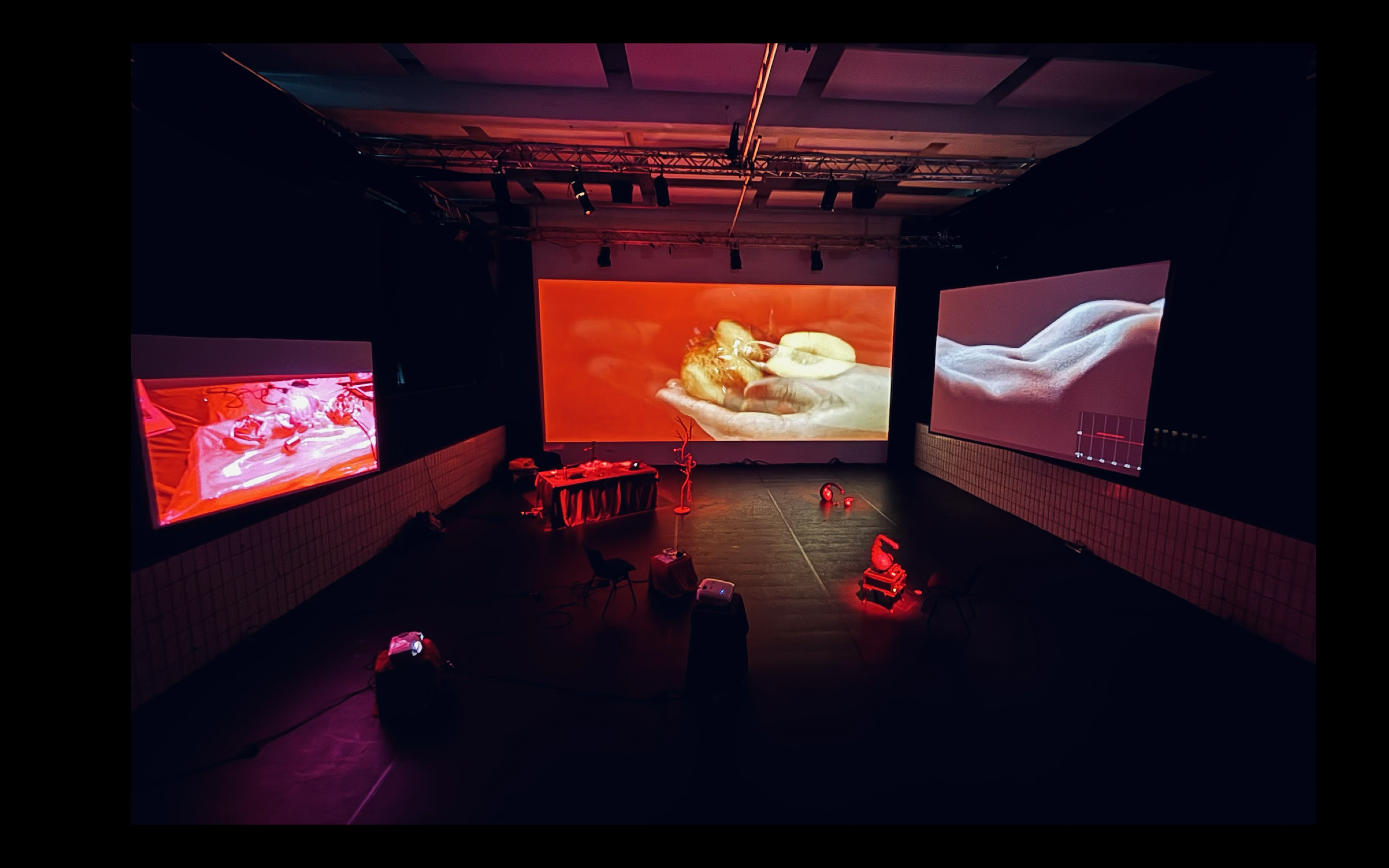
Multimedia Performance Affective Encounters of Body, Wonder and Machine
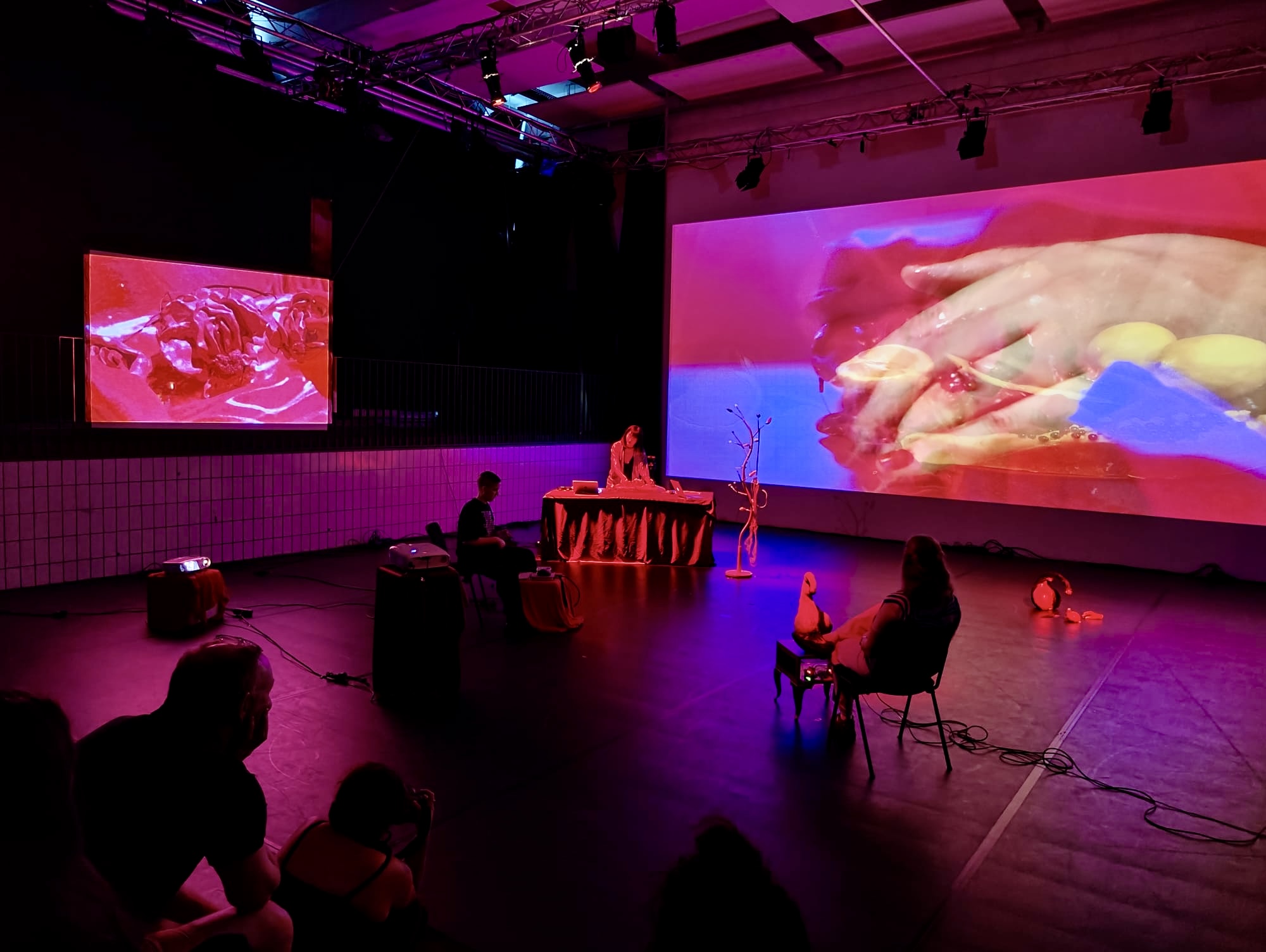
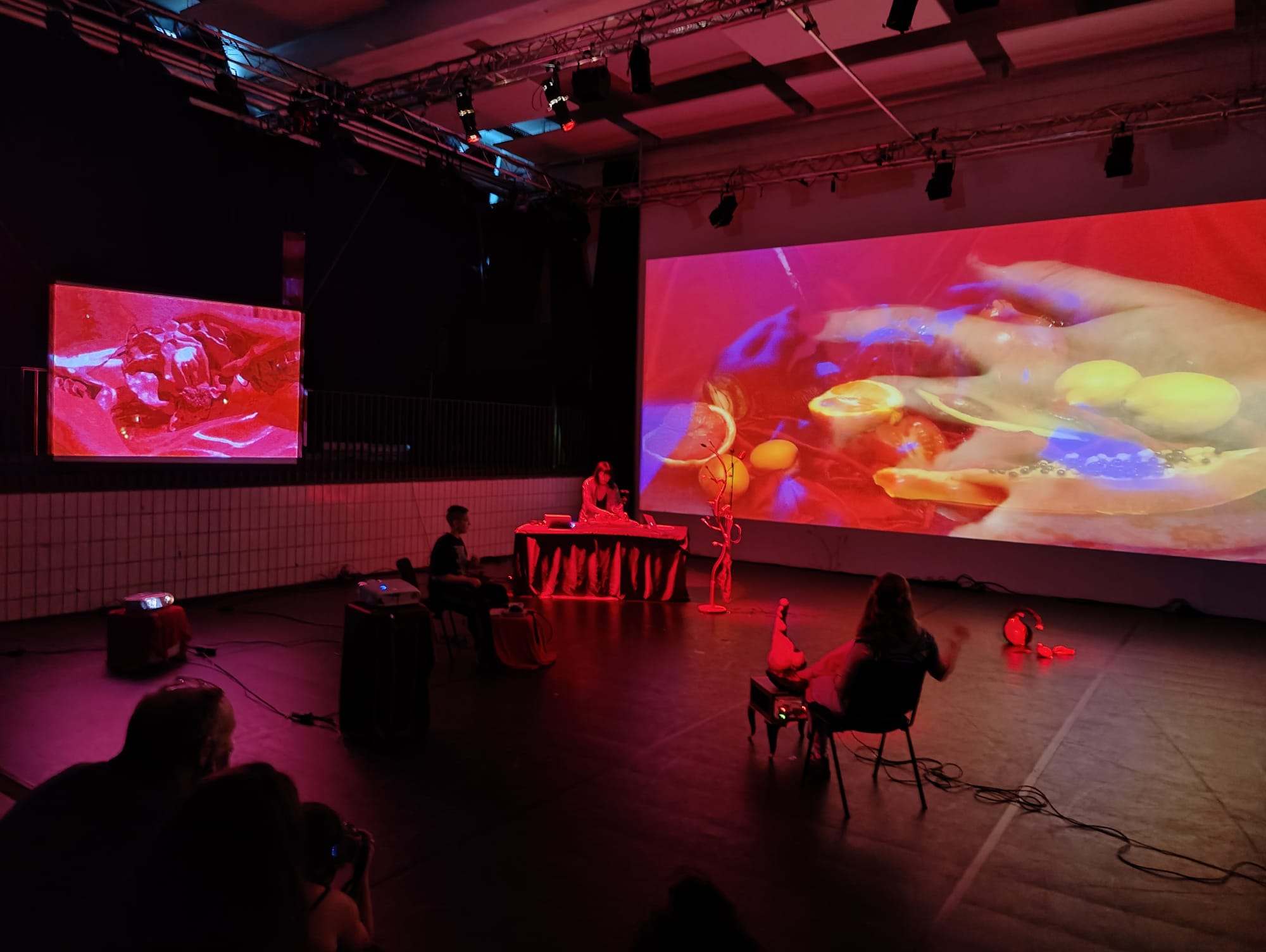
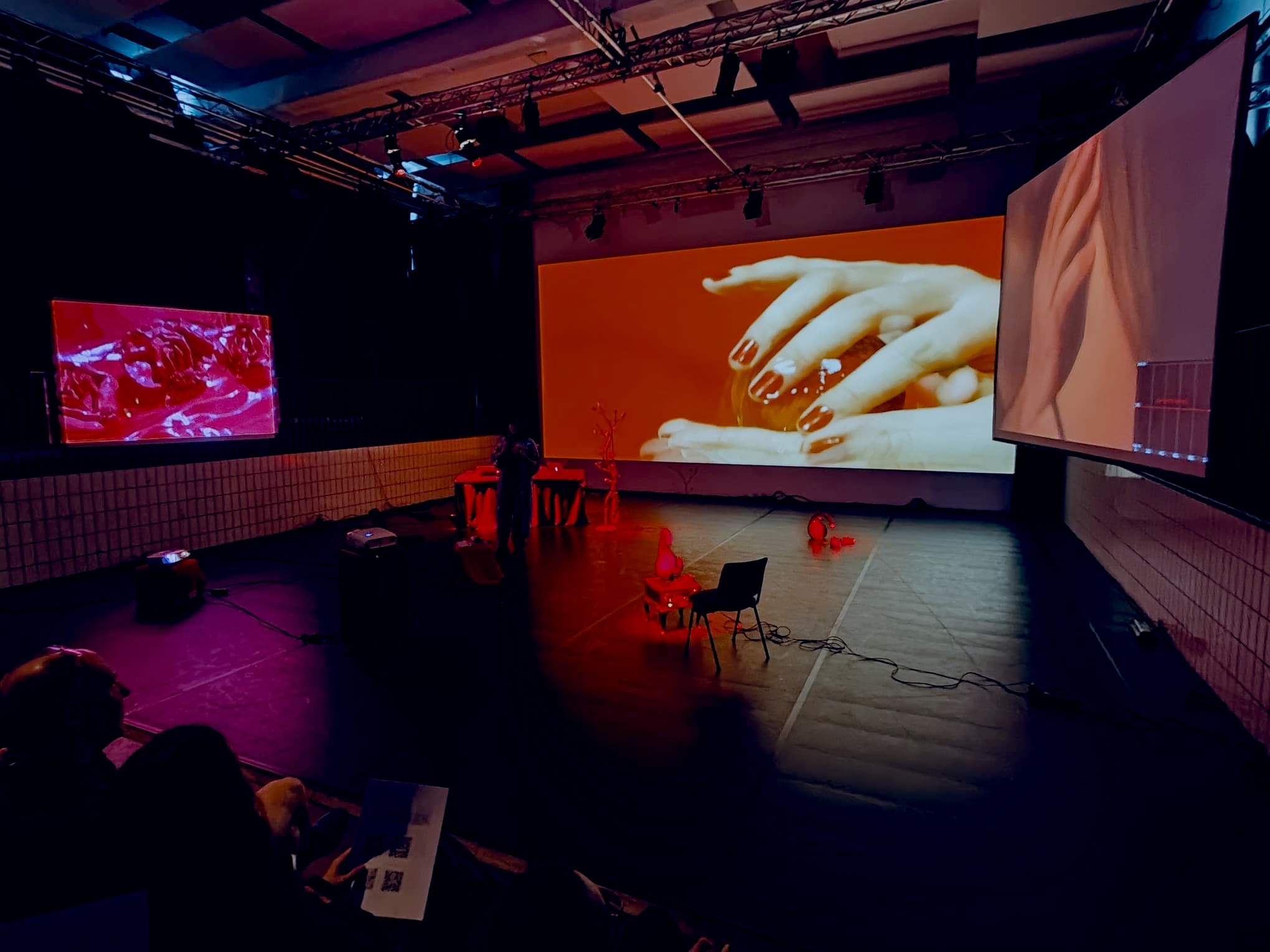
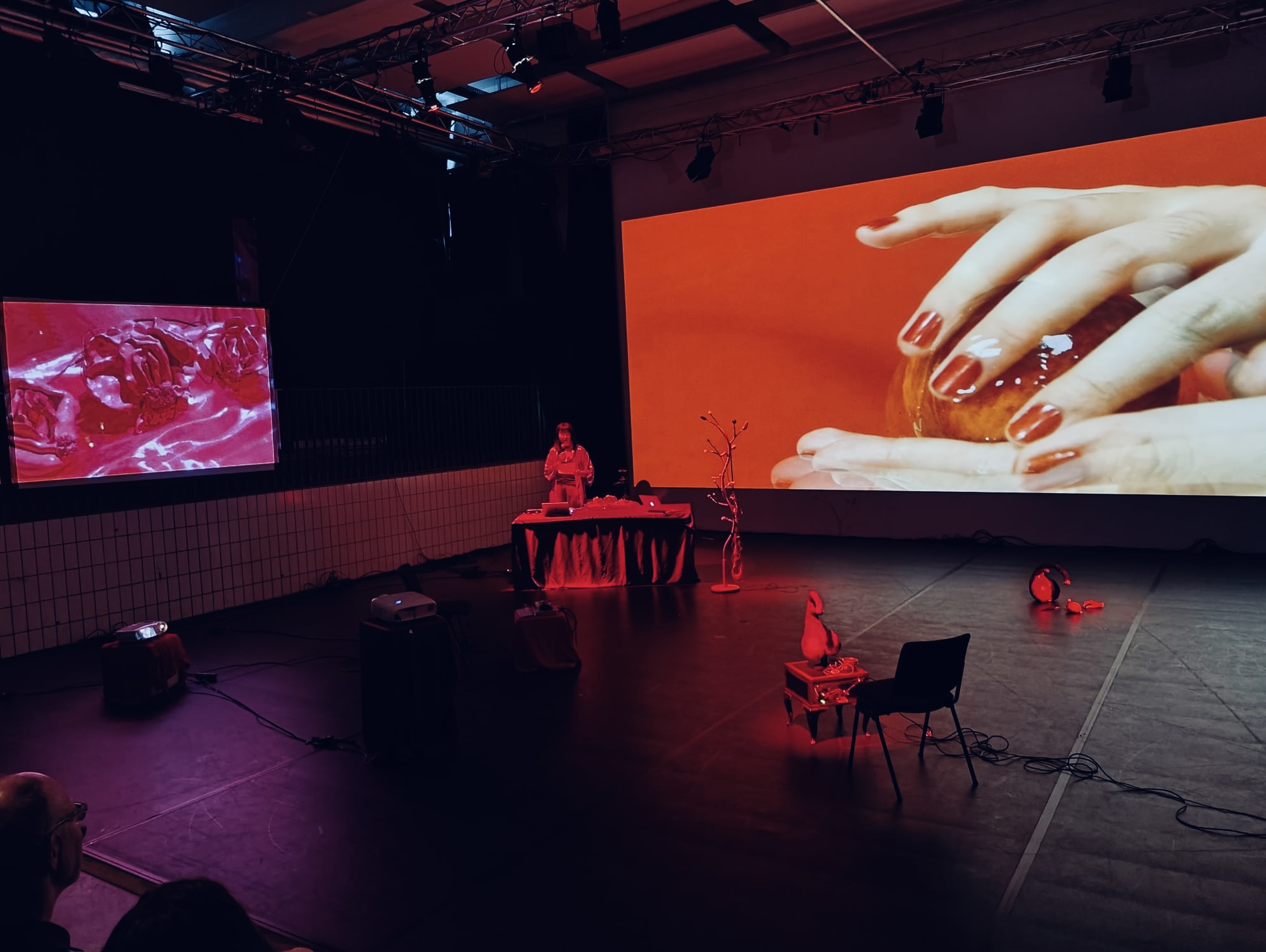
presented at Hybrid Festival 2026 at Uferstudio on May 22nd 2026
Artist: Dr. Chang Gao
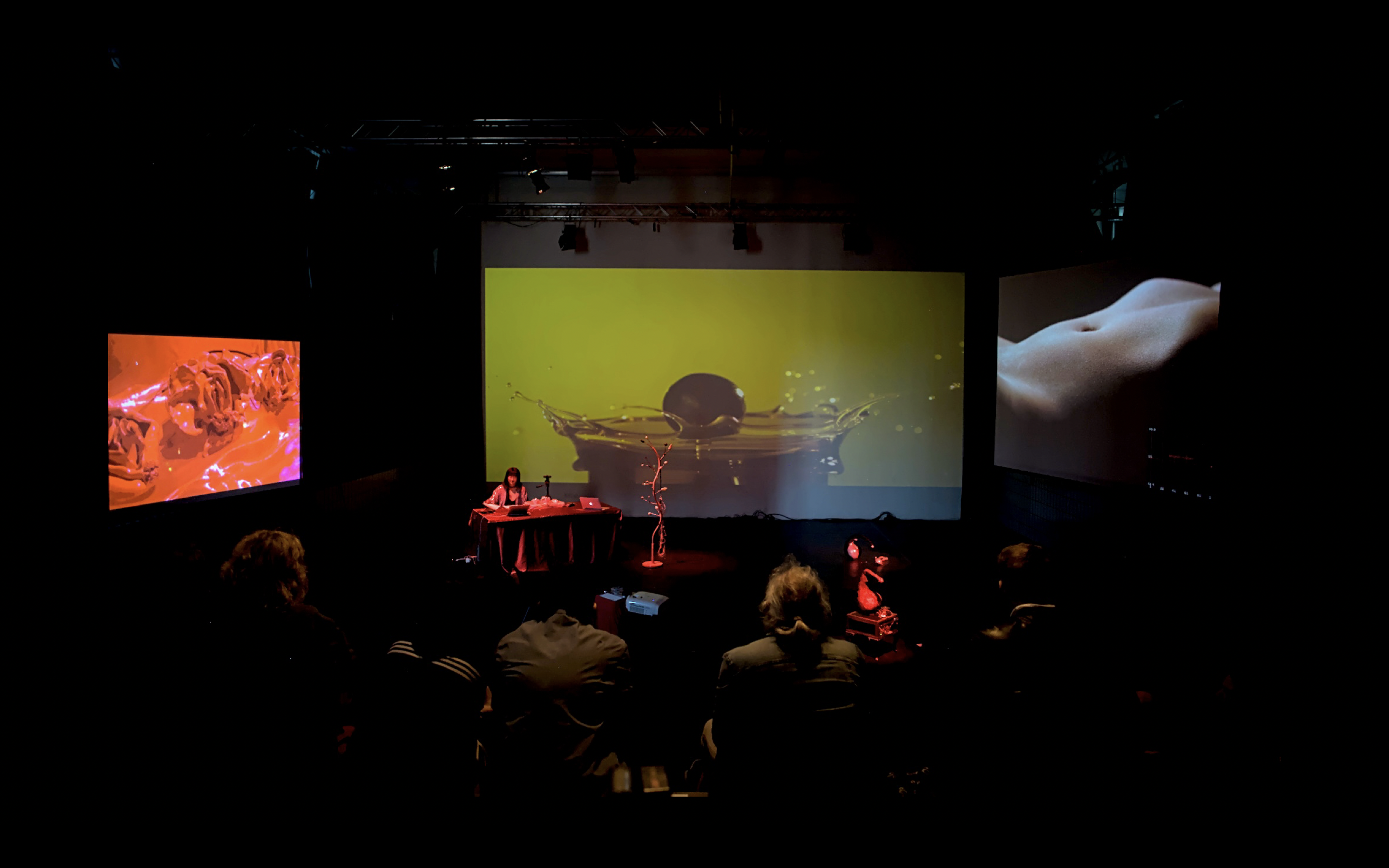
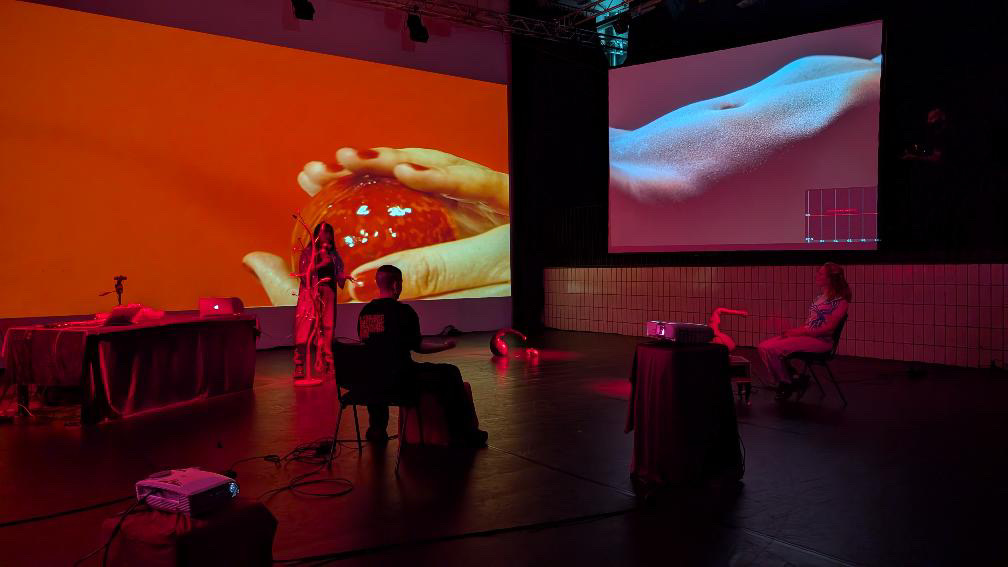
Affective Encounters of Wonder, Body, and Machine
Affective Encounters of Wonder, Body, and Machine is a multimedia performance and practice-based experimental human–machine environment integrating physiological sensing, tactile and bioelectric interfaces, kinetic sculpture, audiovisual computation, augmented reality, and generative AI.
Rather than positioning audiences as passive spectators, the performance involves human participants directly within five simultaneously operating interactive systems. Physiological signals, touch, bioelectric conductivity, hand gestures, and bodily movement become inputs through which participants alter computational, audiovisual, and material processes in real time. The resulting transformations—changes in film, sound, light, sculptural movement, and digital imagery—return to the participants as new sensory stimuli, producing recursive interactions between bodies, machines, and the shared environment.
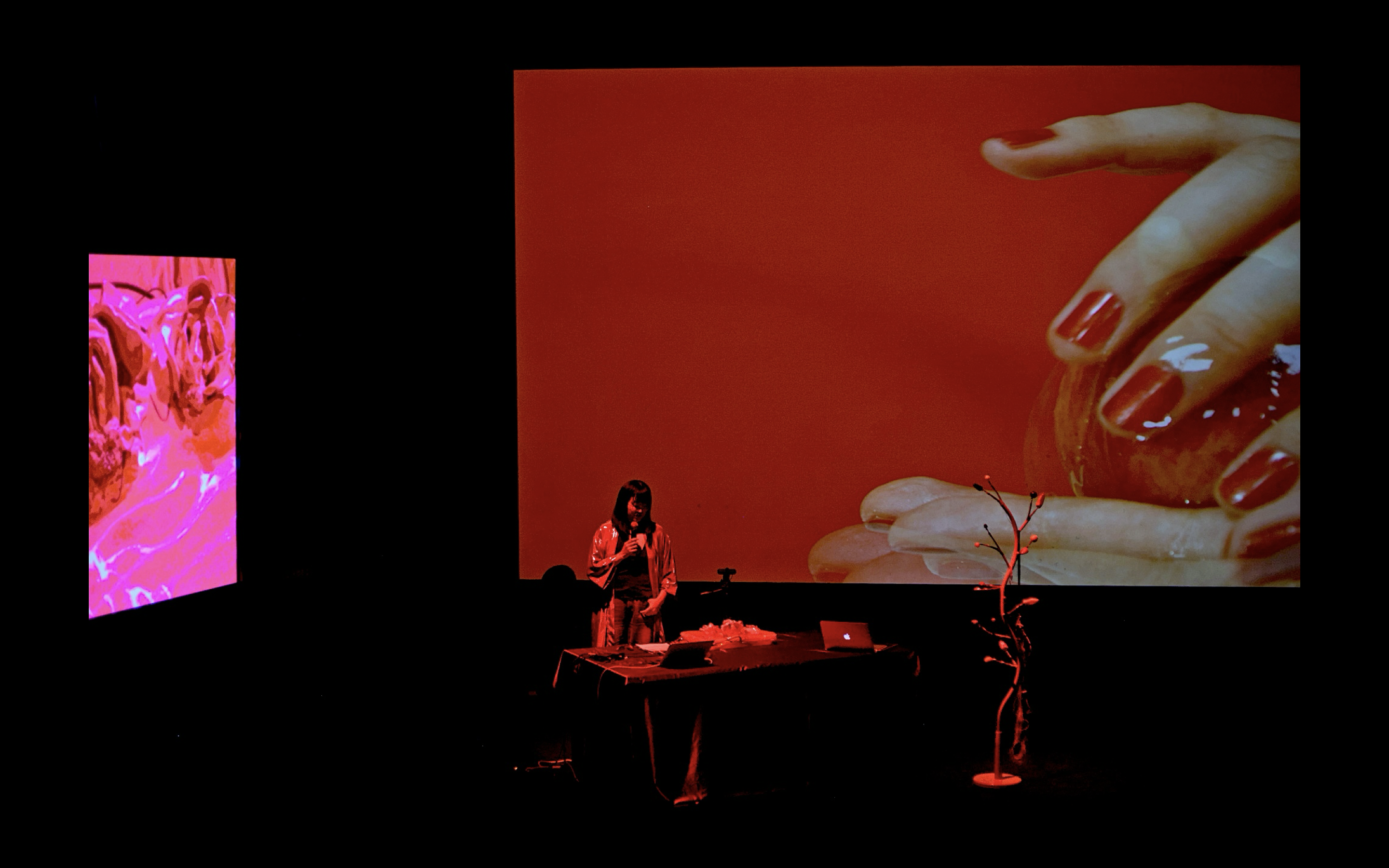
Five Interactive Human–Machine Systems
1. Shower Me with Affection — Physiological Feedback
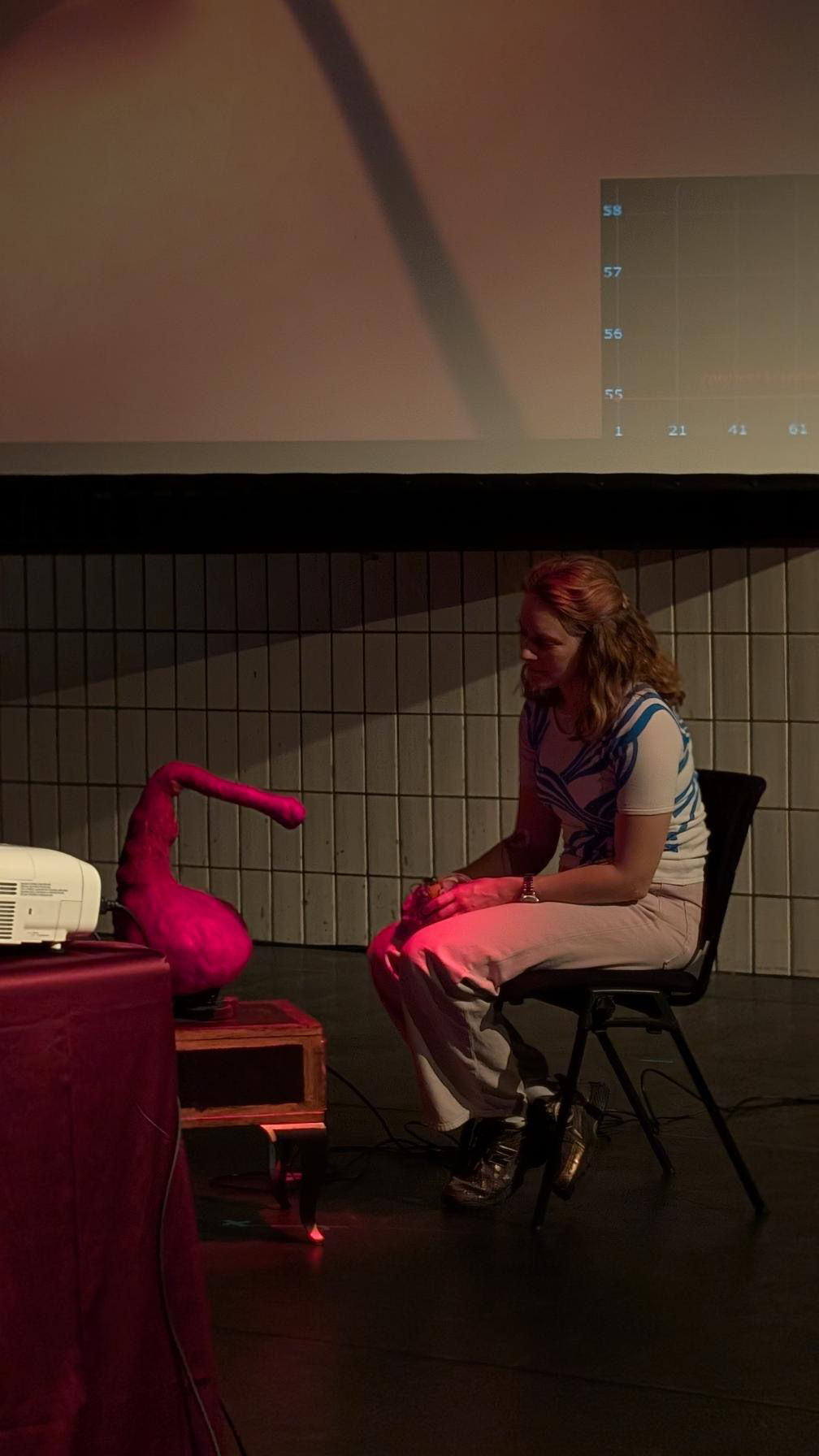
An ECG heart-rate sensor connected through Arduino captures physiological fluctuations from a participant and translates them into real-time changes in kinetic sculpture, film, sound, and light. The participant’s physiological activity therefore alters the environment that they subsequently perceive, creating a recursive body → computation → environment → body feedback loop.
2. Feel My Sensuality — Tactile Interaction
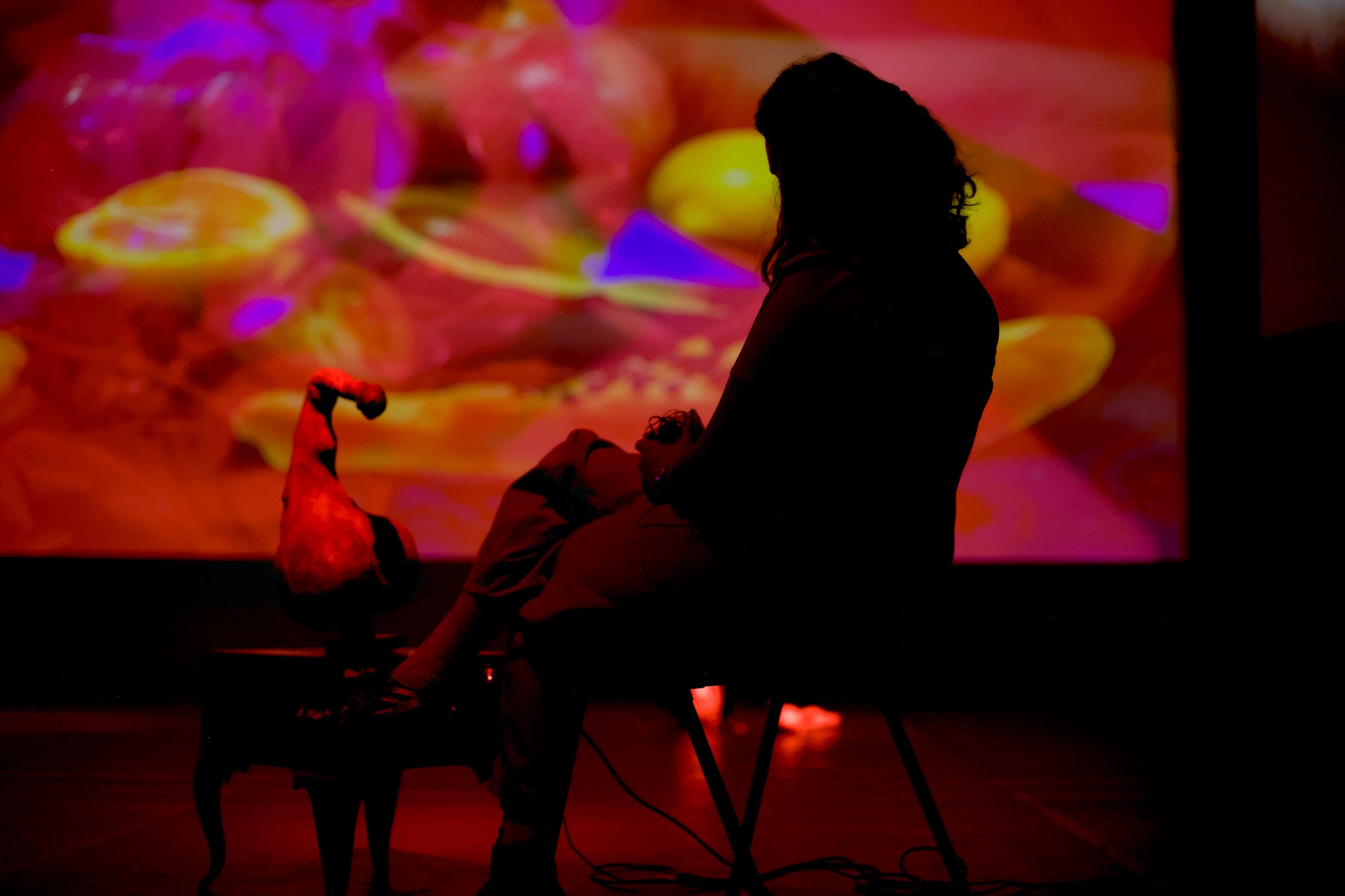
Physical touch becomes the interface between participant and machine. Touching the ceramic sculpture activates and transforms sound and light, while these sensory changes modify the conditions of subsequent interaction. The system investigates touch not simply as an interface command but as a sensorimotor process through which bodily action and computational response become mutually situated.
Chang Gao, Video Recording, Feel My Sensuality, at multimedia performance Can You Feel My Diasporic Love? Affective Encounters of Wonder, Body, and Machine, at Vorspiel/Transmediale & CTM Festival 2026, alpha nova & galerie futura, Berlin
3. Erotic Circuits — Bioelectric Interaction
The participant’s touch is detected through bioelectric sensing and translated into real-time transformations of sound and moving image. Human conductivity therefore becomes part of the computational circuit, creating an embodied interface distributed across body, material, sensing technology, and audiovisual output.
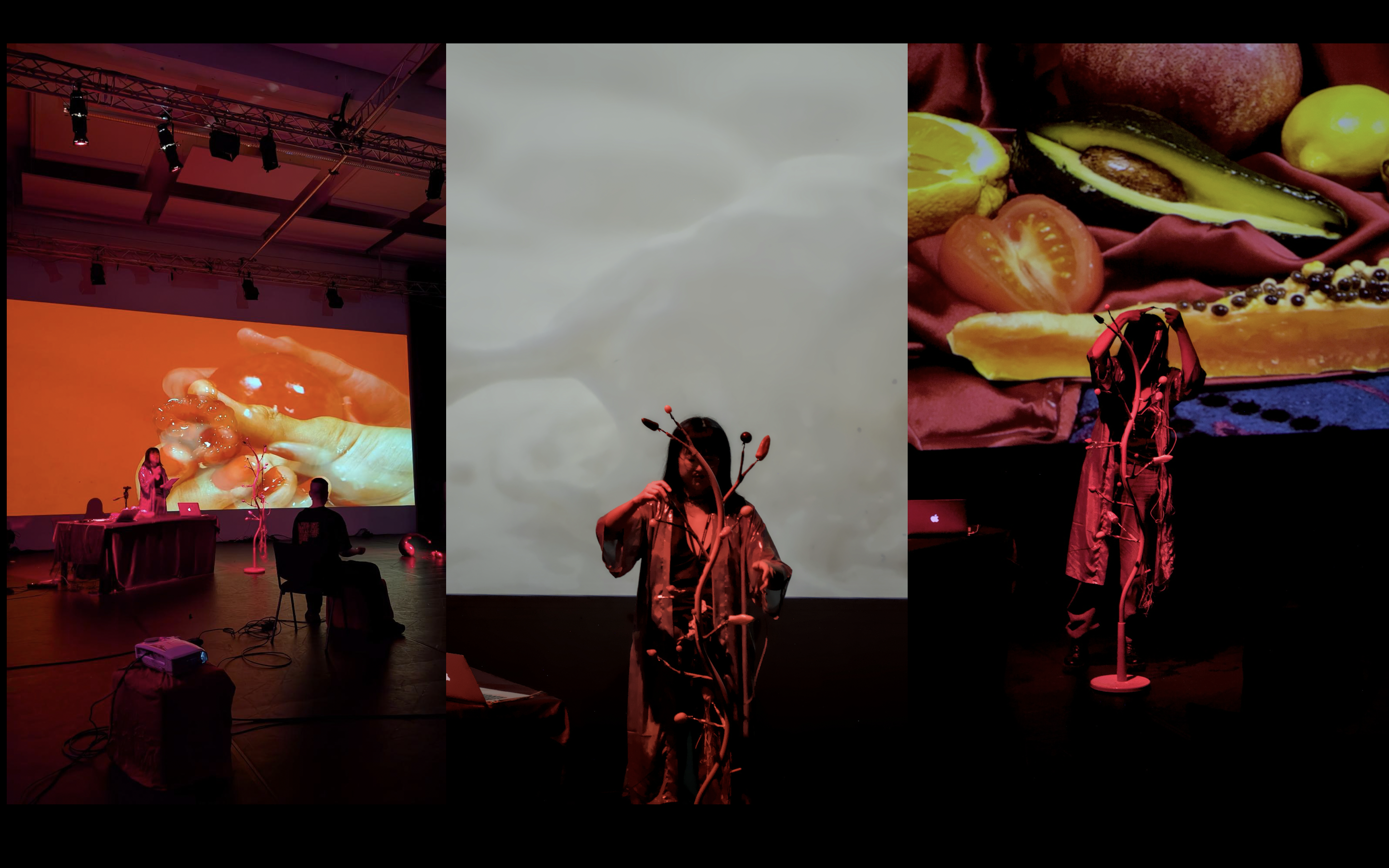
Chang Gao, Erotic Circuits, video recorded at multimedia performance Affective Encounter of Wonder, Body and Machine at Hybrid Festival 2026 at Uferstudio 1, Berlin
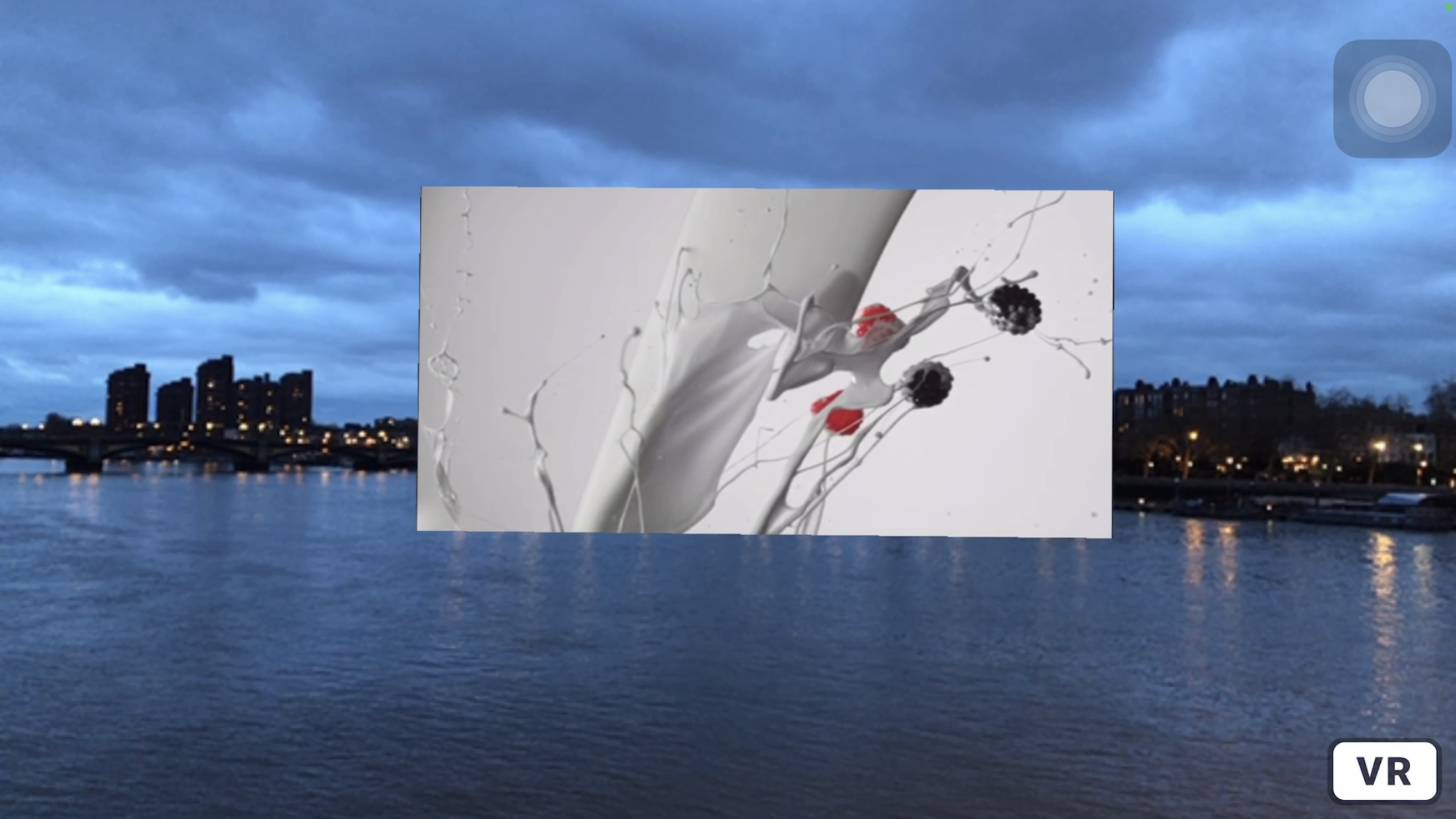
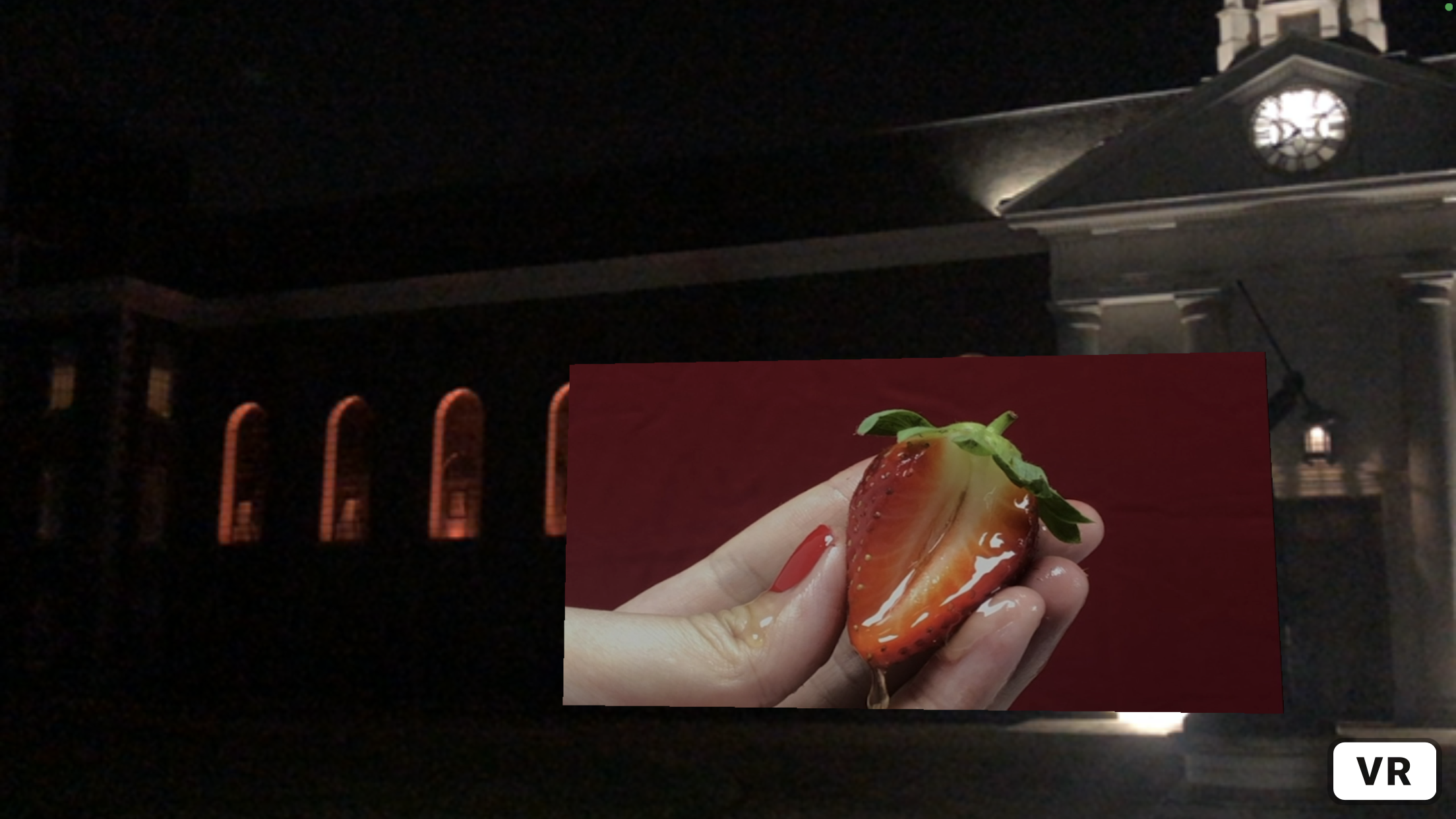
4. Erotic Poetics — Gestural and Spatial Interaction
An augmented-reality interface responds in real time to audience hand gestures within the performance space, extending embodied interaction across physical and digital environments. The participant’s body functions simultaneously as a spatial, gestural, and computational interface.
5. Embodied: Desire, AI & Supernormal Stimuli — Physiological–AI Feedback
A physiological audiovisual system uses ECG-derived signals to modulate an evolving audiovisual environment. Selected visual states from this interaction provide input material for a generative-AI image-to-video pipeline, enabling physiological interaction to condition the visual context from which new machine-generated material emerges. The generated material can subsequently return to the participant as a new audiovisual stimulus, establishing the basis for investigating reciprocal human–AI adaptation.
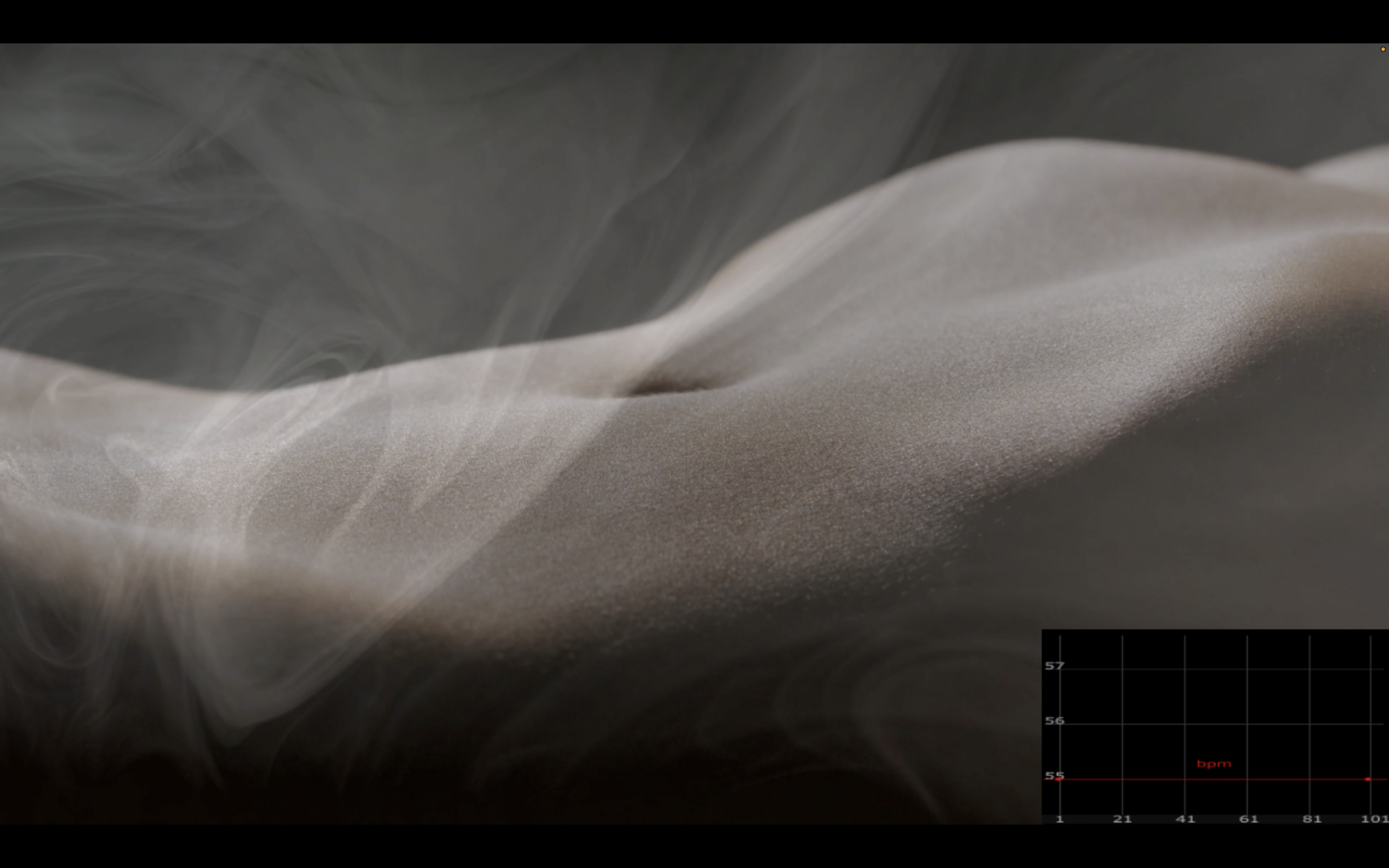
Chang Gao, video clip of Desire, AI & Supernormal Stimuli, heart-rate interactive video generation showcased at multimedia performance Affective Encounter of Wonder, Body and Machine at Hybrid Festival 2026 at Uferstudio 1, Berlin
Human-Participant and Embodied Interaction
Across the five systems, the performance functions as a multi-participant experimental environment in which different forms of bodily activity—physiological fluctuation, touch, bioelectric conductivity, gesture, and spatial movement—become computationally actionable.
The work does not assume that physiological or bodily signals transparently reveal stable internal emotional states. Instead, it investigates affect as something that emerges dynamically through interaction: the body changes the computational environment, the altered environment changes subsequent bodily experience, and this response can again enter the computational process.
The performance therefore approaches embodied cognition and affect as relational and sensorimotor processes, rather than treating the body solely as a source of data to be classified.
A Hybrid Human–Machine Environment
The five systems operate within a shared performance environment involving performers, audience participants, sensing technologies, computational systems, physical objects, audiovisual media, and AI.
Interaction therefore extends beyond a conventional one-human/one-machine model. Different participants interact with different computational subsystems while simultaneously experiencing the consequences of other interactions within the shared environment.
This creates a hybrid human–machine ecology through which the project asks:
How do physiological, tactile, gestural, and affective forms of human behaviour change when they become active components of a responsive computational environment?
And, extending this toward human–AI hybrid systems:
What forms of coordination, adaptation, and emergent behaviour might develop when multiple humans and adaptive artificial systems continuously influence one another through a shared environment?
The current performance provides a practice-based experimental platform for developing these questions into controlled human-participant studies. Its next research stage moves from real-time responsive interaction toward measurable human–AI co-adaptation, investigating how embodied human feedback could inform adaptive artificial behaviour and how machine adaptation subsequently reshapes human physiological, behavioural, and social responses.
In this sense, Affective Encounters of Wonder, Body, and Machine positions artistic performance not simply as an object of study, but as an experimental environment for investigating embodied cognition, physiological interaction, real-time human–machine feedback, and emerging forms of hybrid human–AI behaviour.
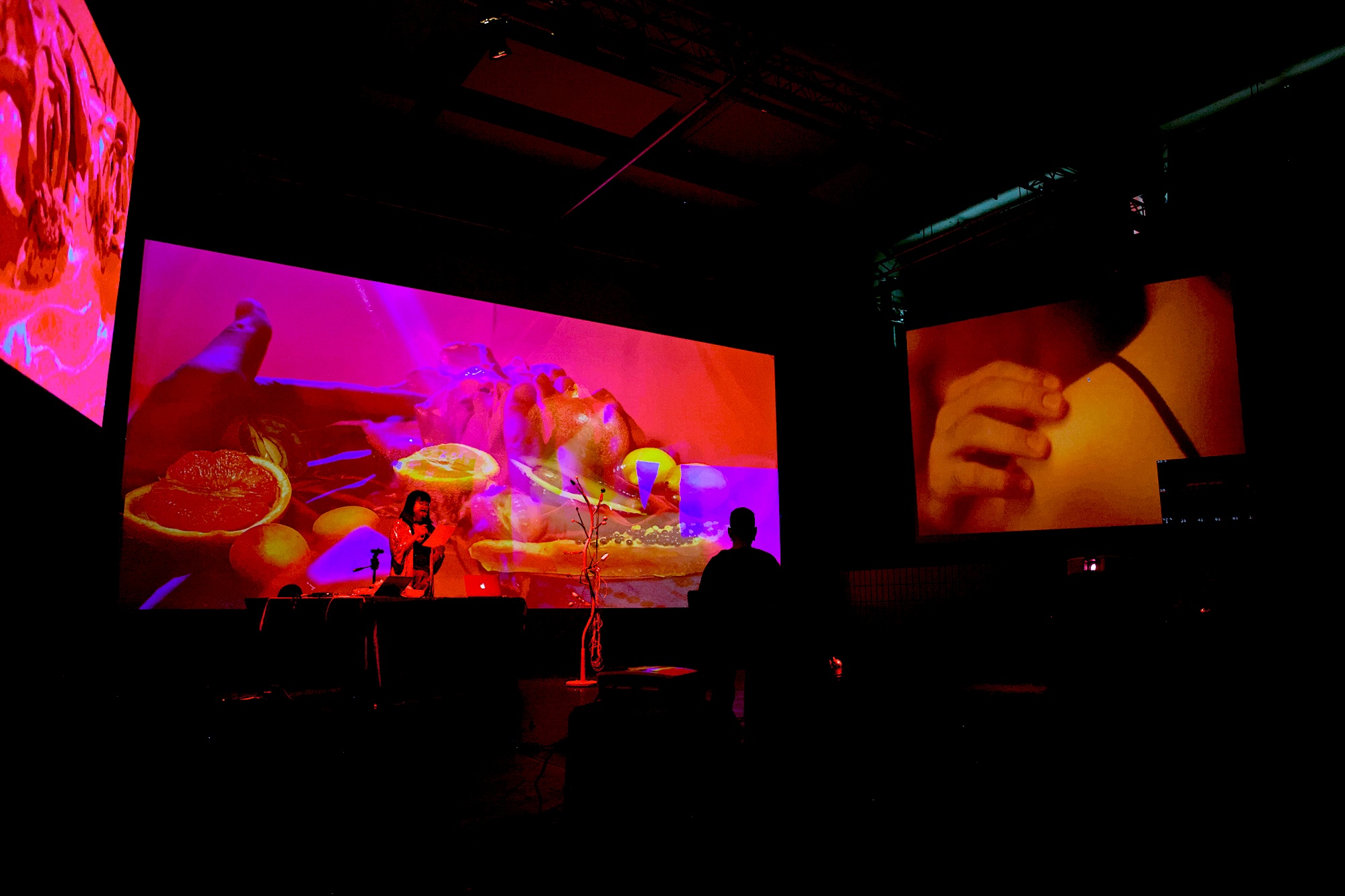

Entire Recording of the performance at Hybrid Festival 2026: