SensoryHybrid³
Body, Desire and Technological Power
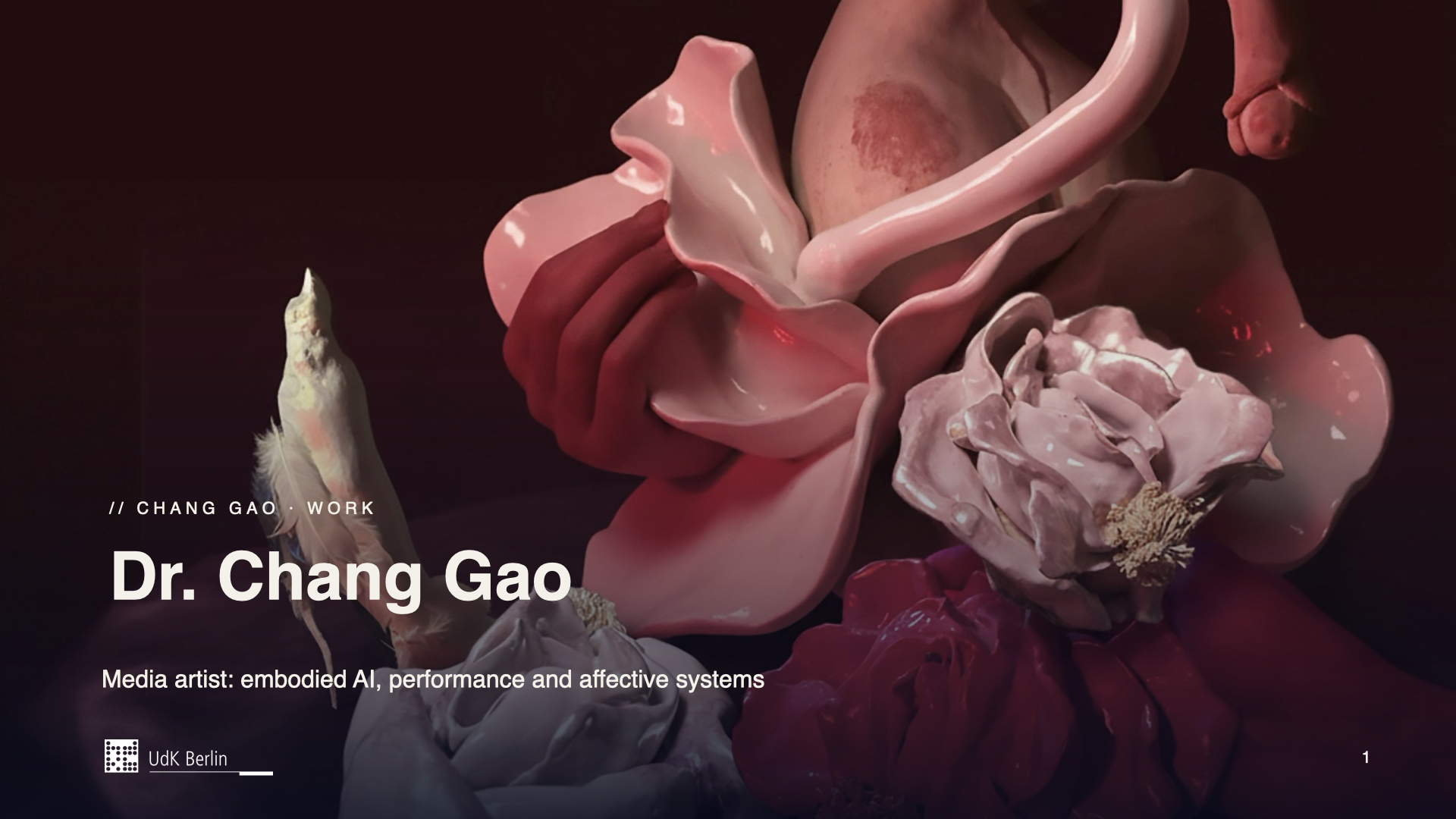
SensoryHybrid³ is my ongoing artistic-research practice exploring how bodies, desire and sensory encounters can reveal—and intervene in—the cultural assumptions built into technological systems. Working across sculpture, performance, film, augmented reality, bioelectric sensing and generative AI, I ask who has the authority to interpret a body, define legitimate desire and determine what becomes visible.
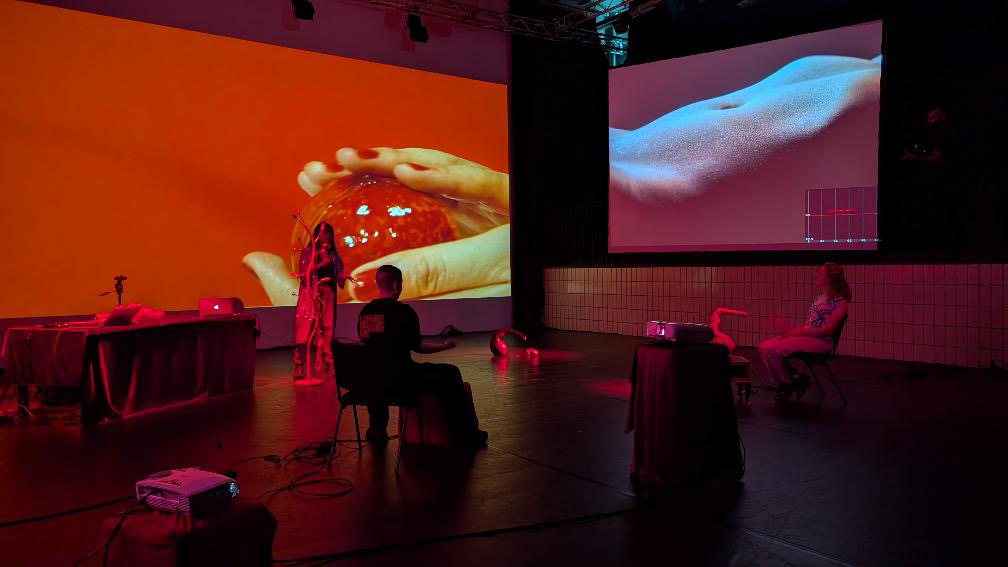
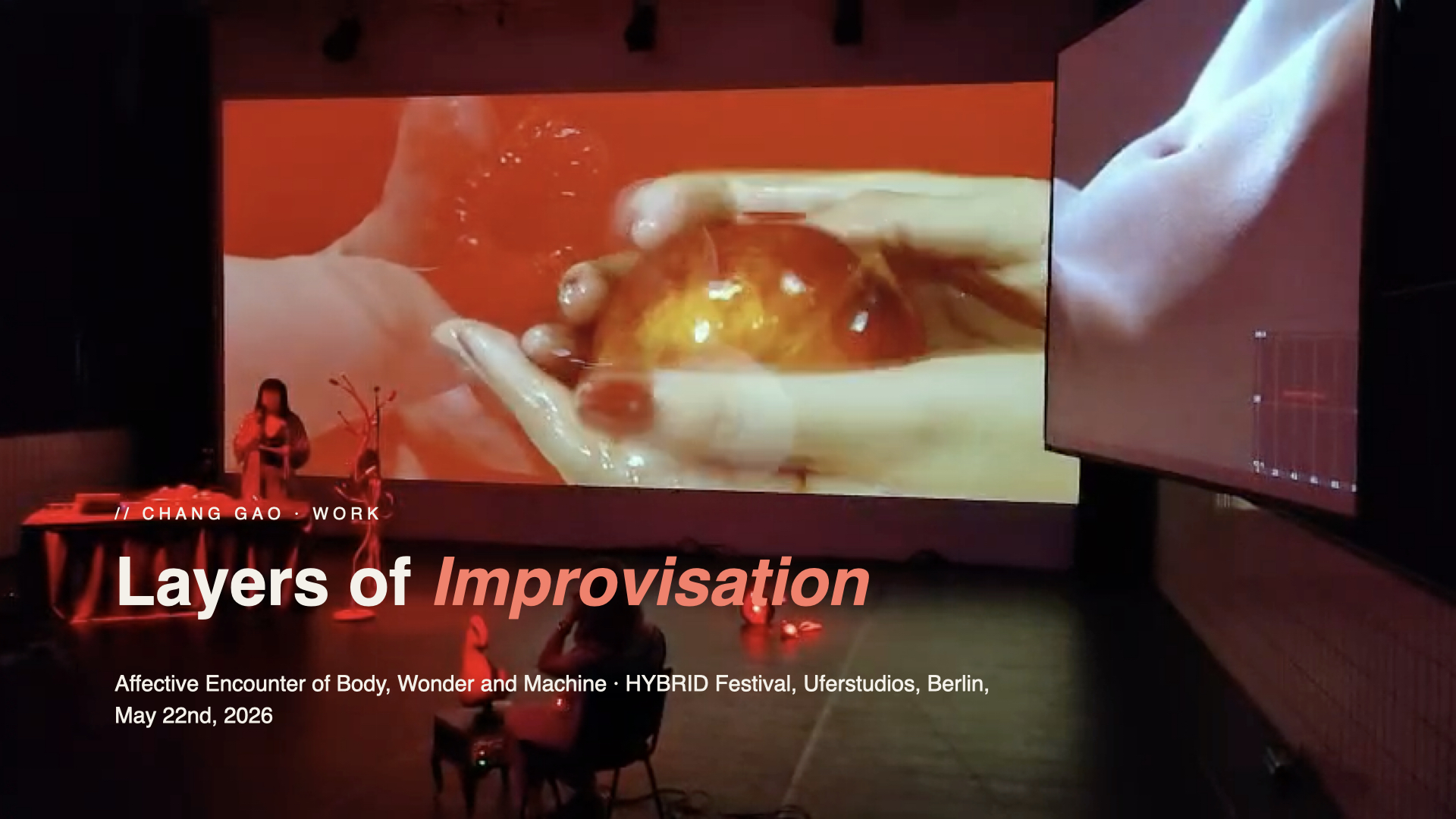
Chang Gao, Affective Encounter of Body, Wonder and Machine. Performance documentation, Hybrid Festival 2026, Uferstudio 1, Berlin.
From bodily affect to technological critique
My doctoral research at the Royal College of Art investigated eroticism and supernormal stimuli as artistic tools for confronting censorship, cultural hegemony and postcolonial power in Chinese public space. SensoryHybrid³ extends these questions into the technologies through which bodies are represented, sensed and classified.
Desire is culturally situated. What appears beautiful, intimate or acceptable is shaped by histories, social structures and relations of power. In generative AI, these structures also operate through prompts, captions, learned associations and content restrictions. I investigate the friction between such categories and embodied experience: what happens when an encounter exceeds the language available to describe it?
Three connected inquiries
Body and interpretive authority
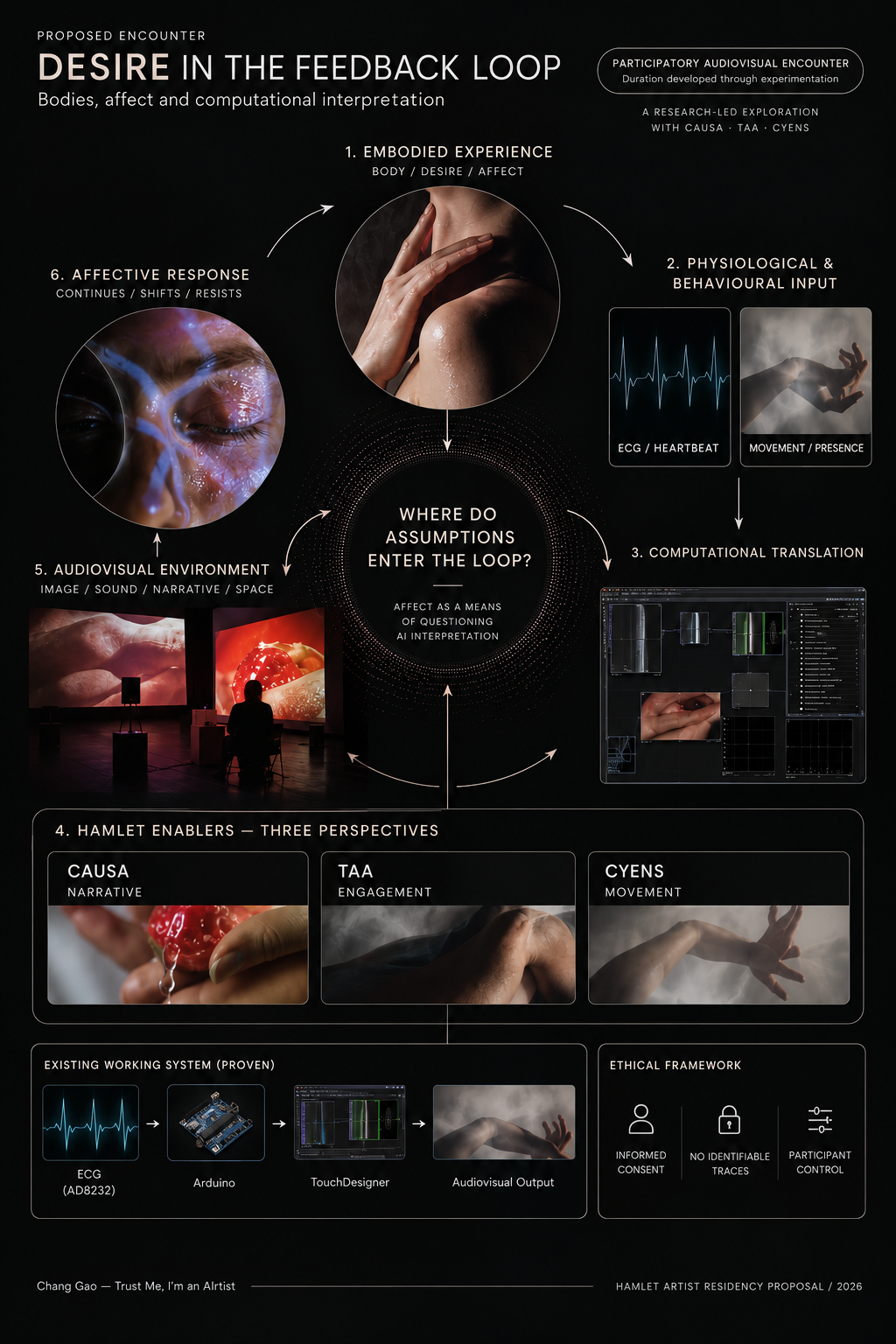
A heartbeat, a touch or a change in electrical conductivity becomes meaningful through interpretation. I make the rules connecting bodily activity to sound, light and moving images part of the artistic investigation. Whose interpretation governs the encounter, and what agency does the participant have within it?
Desire and algorithmic representation
Supernormal stimuli exaggerate features that may intensify attention and response. I use this concept to question how AI-generated imagery amplifies culturally coded desirability. A stronger response can reinforce an existing stereotype as readily as unsettle it. The research asks how to distinguish amplification from a change in representation.
Intimacy and public visibility
Intimacy becomes political when institutions and technologies regulate where bodies may appear and how they may relate. Through responsive sculpture, performance and augmented reality, I investigate vulnerability, queer relationality and the policing of public space. Technological visibility can enable expression while also creating conditions for surveillance.
Selected works
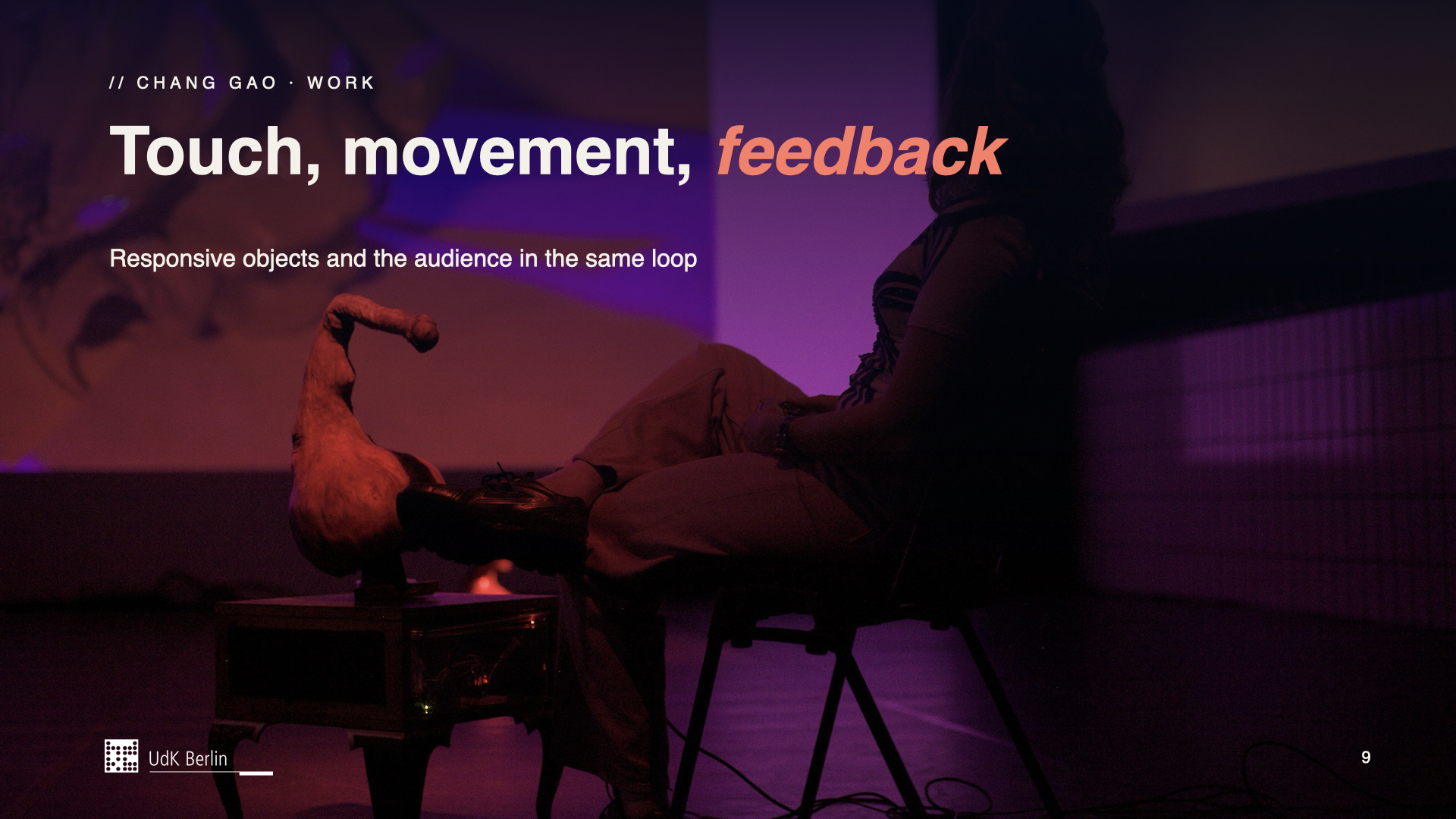
Shower Me with Affection
Heartbeat-responsive film and sculptural installation
The participant’s heartbeat enters an audiovisual encounter, bringing bodily activity into the organisation of the work. This raises a question about interpretive authority: who decides how a physiological signal becomes an image, a sound or a change in atmosphere? A heartbeat does not establish emotional meaning, desire or consent.
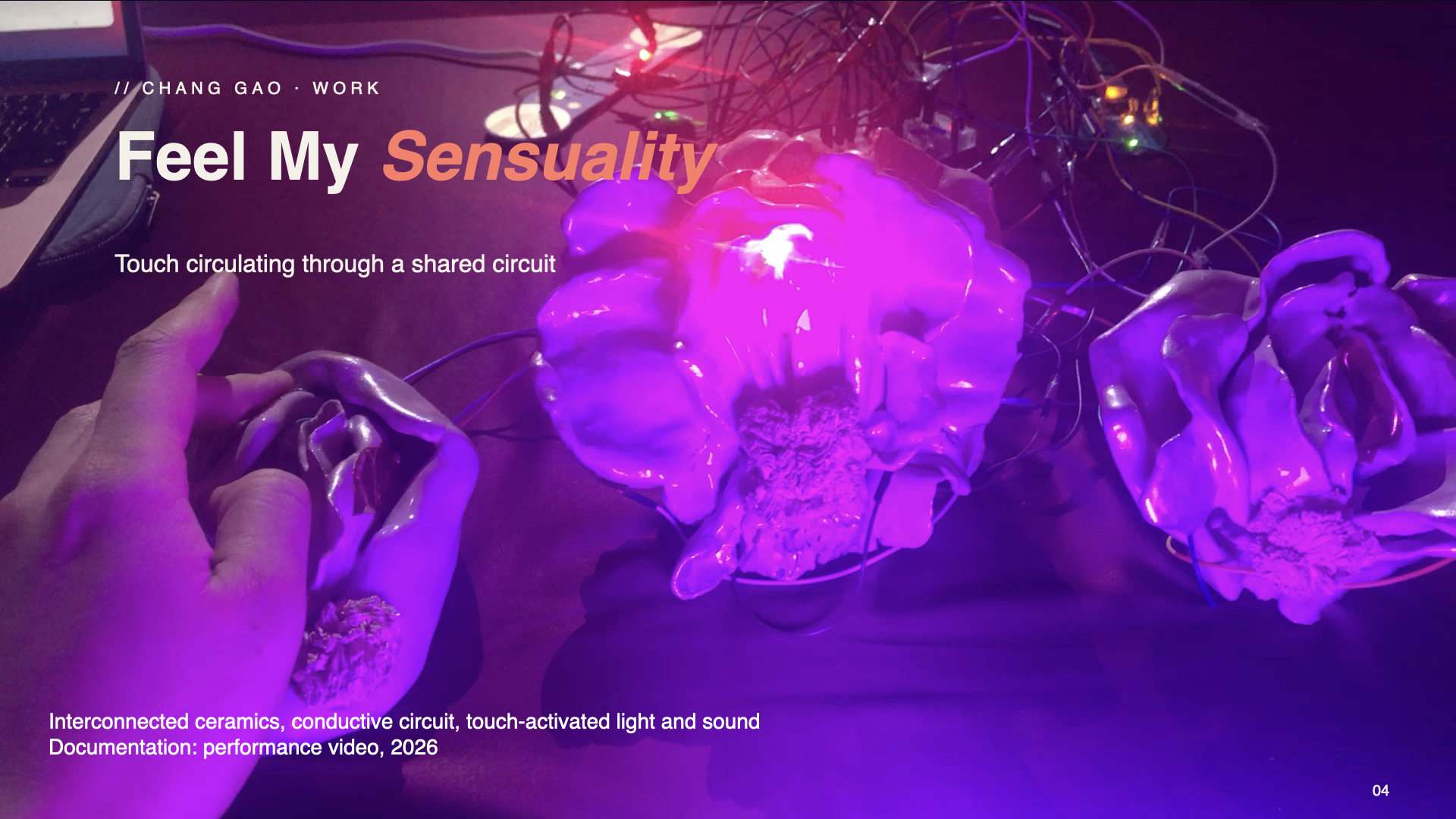
Feel My Sensuality
Interactive ceramic sculpture, touch, electrical circuits, light and sound
Interconnected ceramic forms turn individual contact into a shared sensory event. Touch circulates through a system of bodies, materials and electronics, opening questions about queer interdependence and reciprocal attention. The work also exposes a tension: the same contact that supports intimacy can become a technological input to be captured and interpreted.
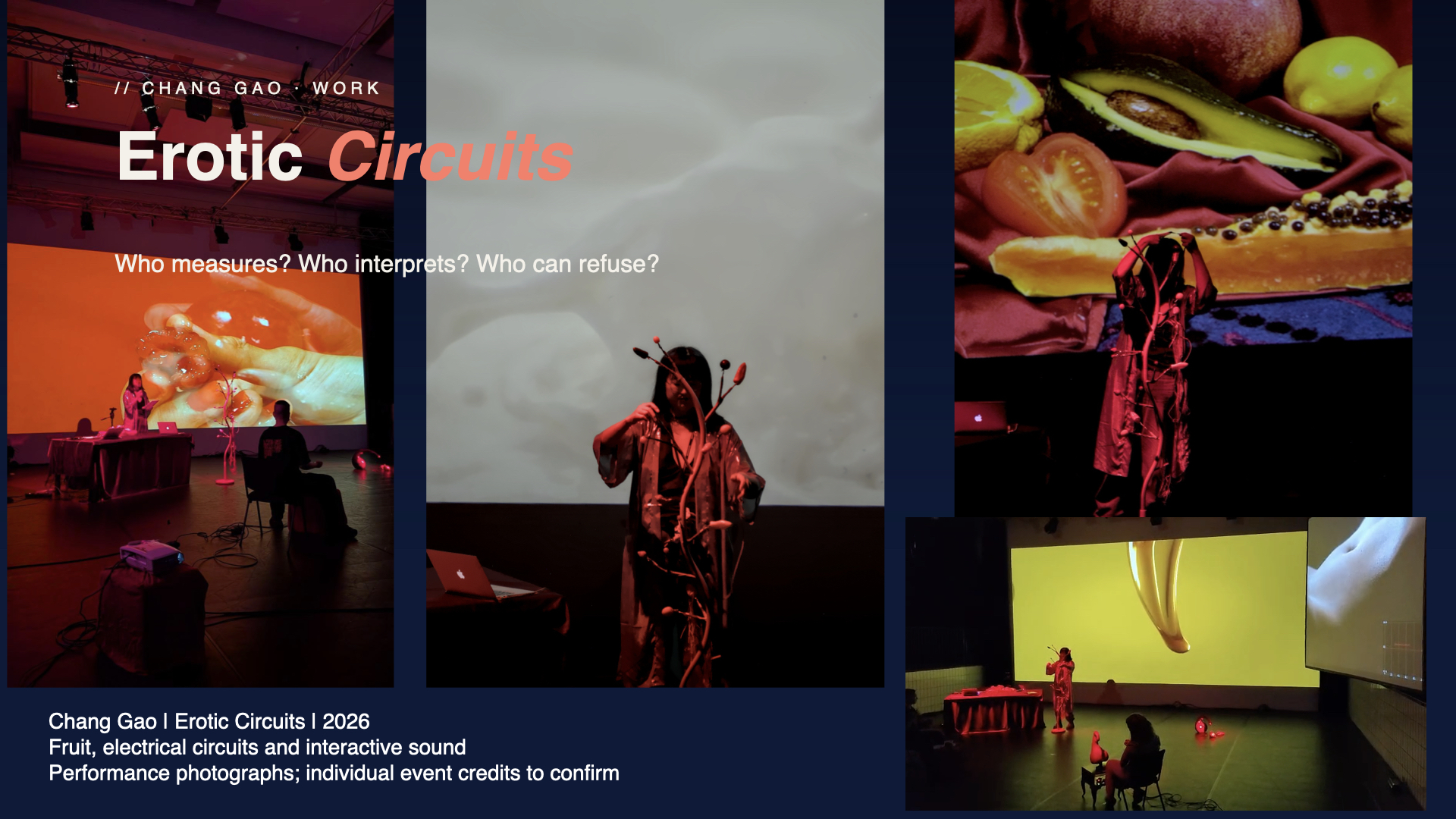
Erotic Circuits
Fruit, electrical circuits and interactive sound
Organic materials and human touch become active elements within an electrical encounter. The work brings desire and material vulnerability into contact with the politics of sensing. When bodily contact becomes actionable information, who controls its translation—and what would it mean for a participant to influence or refuse that process?
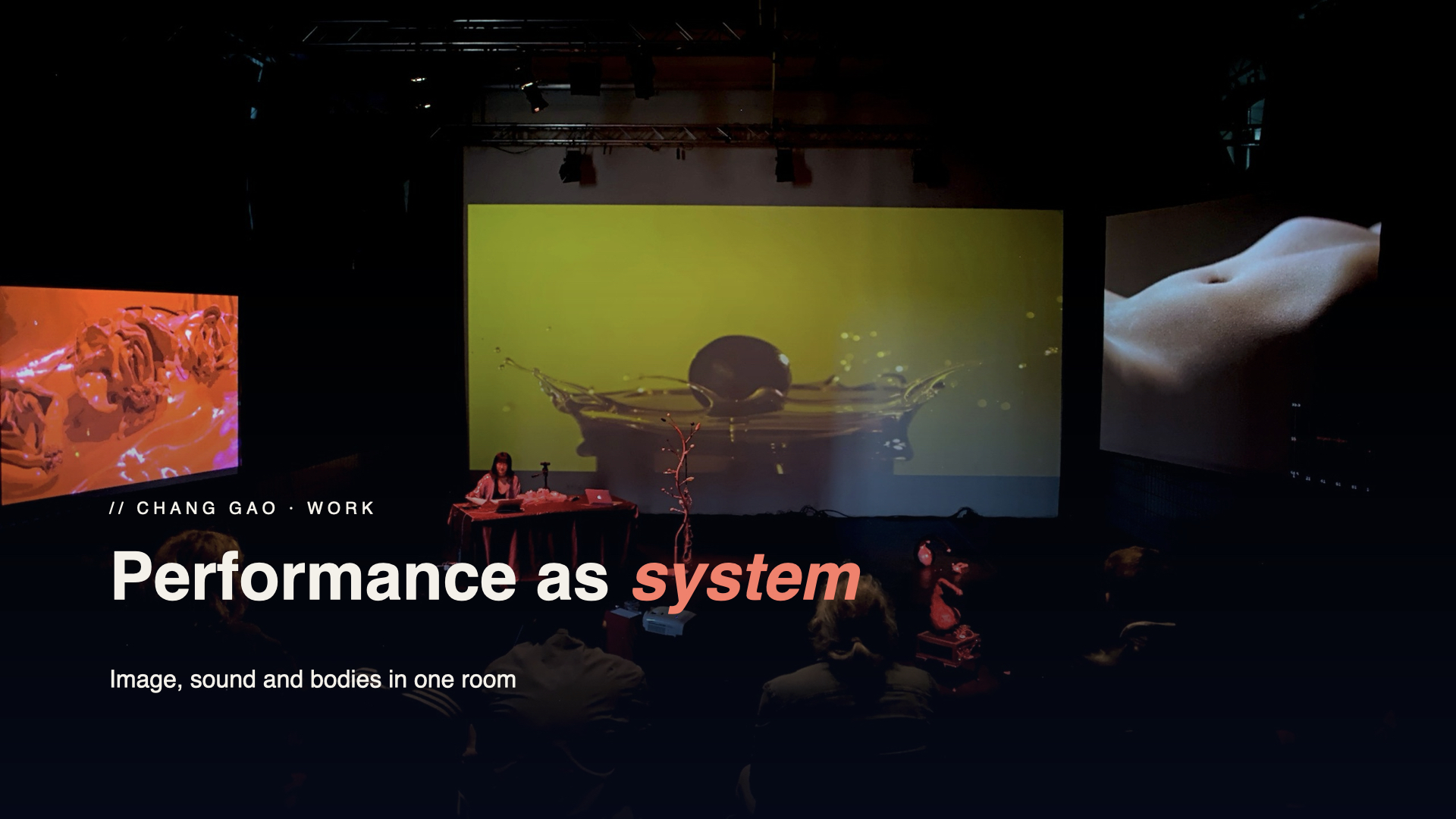
Affective Encounter of Body, Wonder and Machine
Multimedia performance and responsive environment
Sculpture, film, sound and bodily interaction meet in a shared performance environment. Wonder interrupts habitual recognition; desire exposes the values invested in what we recognise. The work investigates how participants encounter themselves and one another through responsive technologies, and how experiences of intimacy, identity and cultural difference exceed a system’s classifications.
Desire, AI and Supernormal Stimuli
Revealing AI Bias through Bodily Affect · Work in progress, 2026
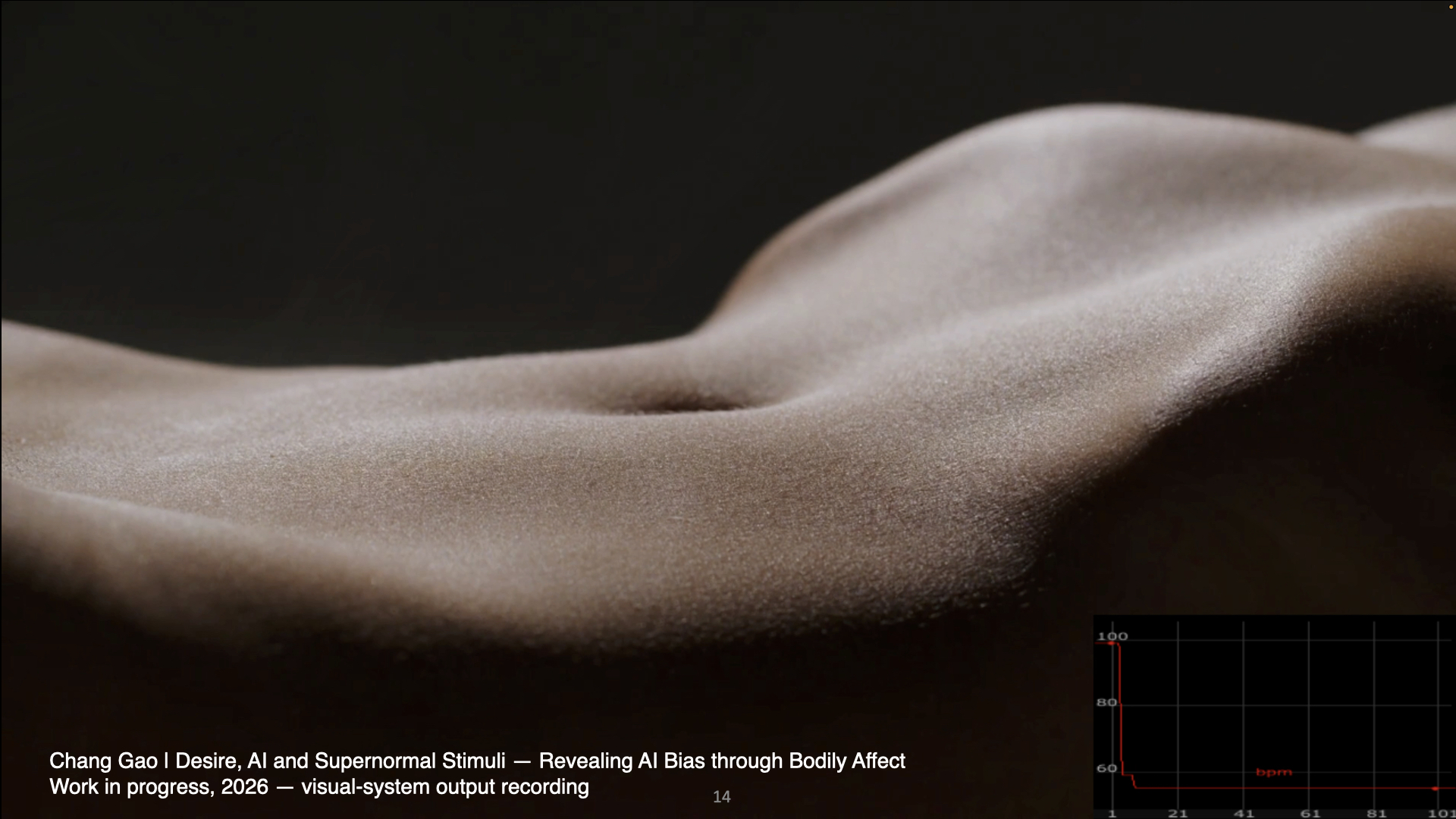
Chang Gao, Embodied AI: Desire, AI and Supernormal Stimuli, 2026. Installation documentation published on the project page.
This project makes the relationship between linguistic-cultural bias and bodily encounter explicit. It investigates how generated images construct desirability, how censorship and algorithmic constraints shape what can appear, and whether embodied feedback can open other representational possibilities.
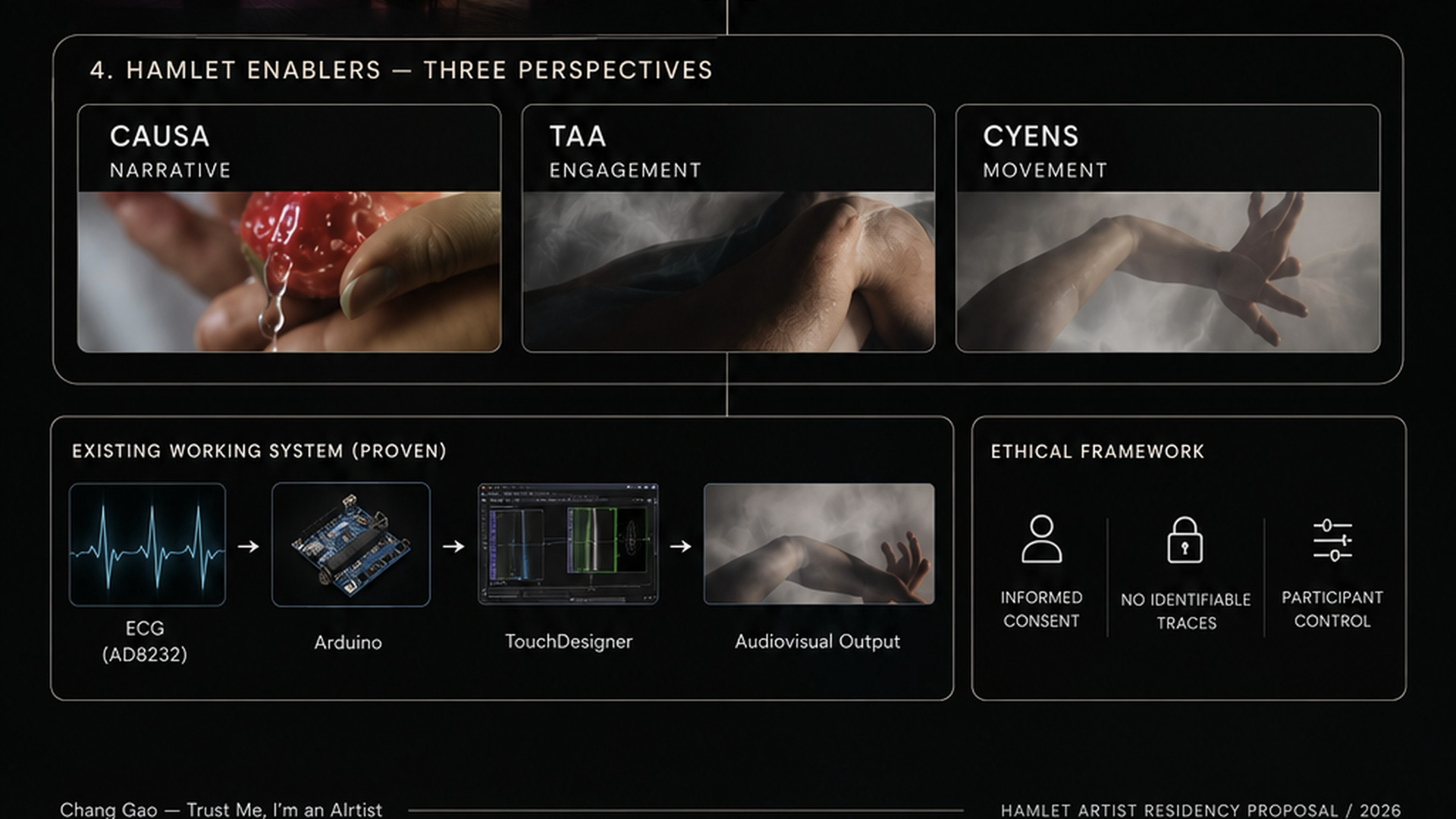
In the documented configuration, ECG affects the audiovisual environment in TouchDesigner while ComfyUI generates in parallel, without an automatic return path. Integrating these processes into a reciprocal generative system remains a research direction. Heightened physiological responsiveness alone is not evidence that bias has been reduced.
Explore Desire, AI and Supernormal Stimuli
Erotic Poetics
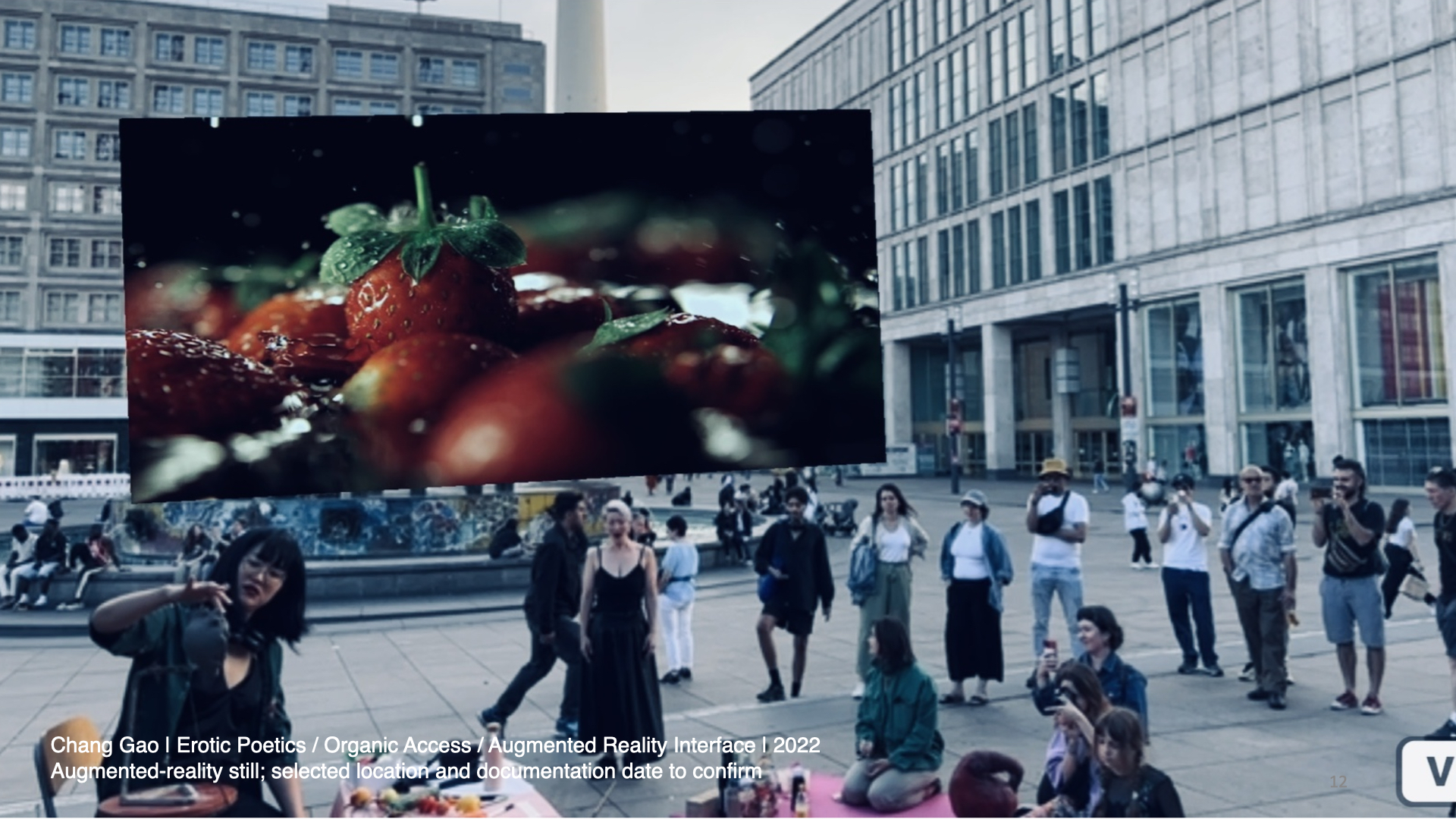
Augmented reality and public-space interventions
Erotic imagery enters everyday space through augmented reality, questioning who may express intimacy and occupy public visibility. The work addresses censorship, digital surveillance and the authority to police shared space. Its interventions examine how acceptable bodies and gestures are distinguished from those treated as disruptive.
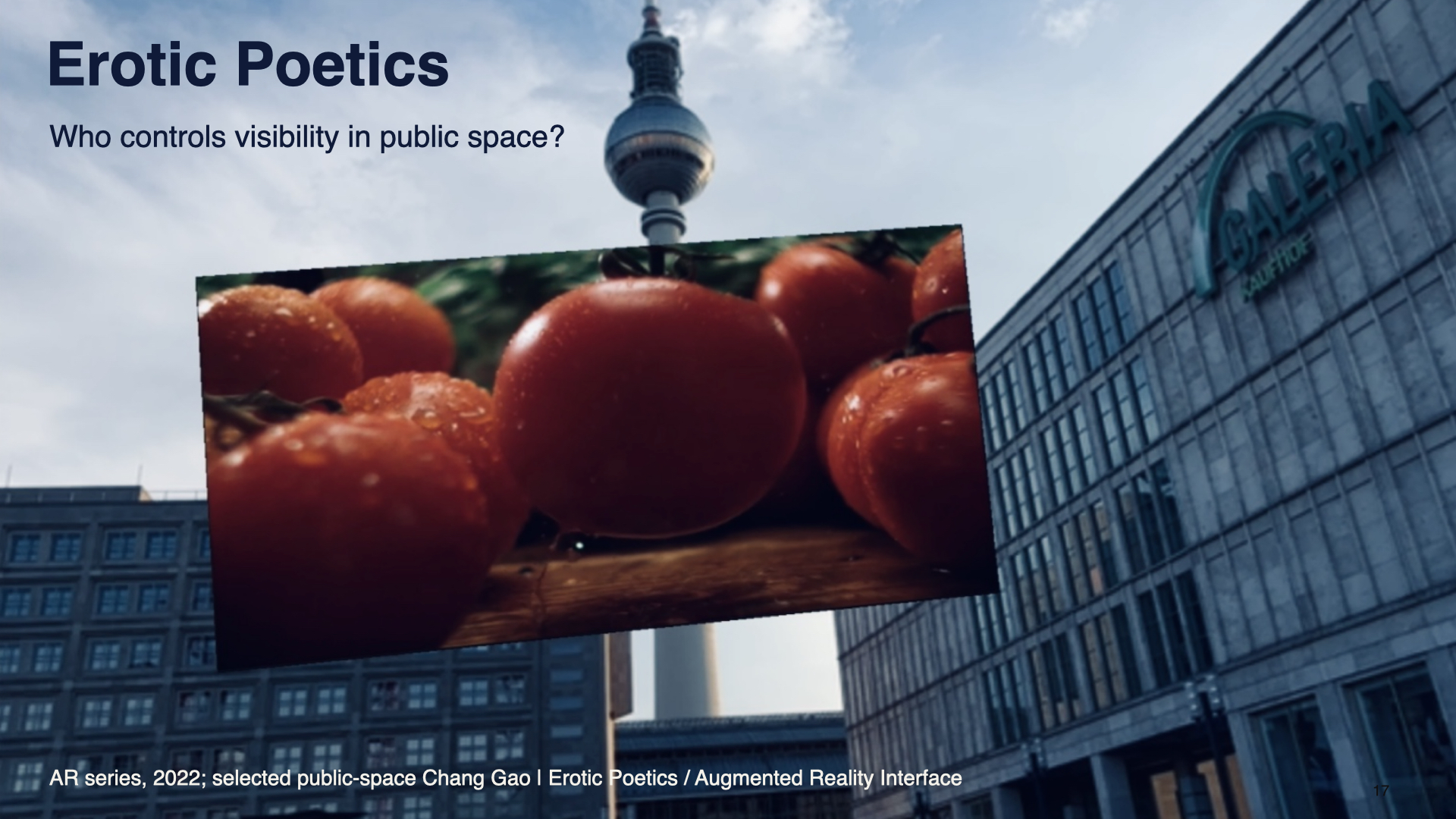
Chang Gao, Organic Access. AR/public-space imagery published with documentation of the 2024 presentation in Graz.
Explore related AR and public-space work
Art as a site of investigation
Across these works, artistic encounters make the politics of a system available to experience and question. Bodily signals remain ambiguous; the mappings that translate them into responses are constructed. My research asks how participants might gain agency within those mappings, and under what conditions an encounter changes a representation rather than reproducing its assumptions.
SensoryHybrid³ brings these inquiries together through artistic practice, critical reflection and experimental systems.