Sex and Desire as subversive Force Combating Chinese Censorship_Robotics Speaking for the Speechless exhibiting at Institut für Körperforschung und Sexuelle Kultur
9. April 2025
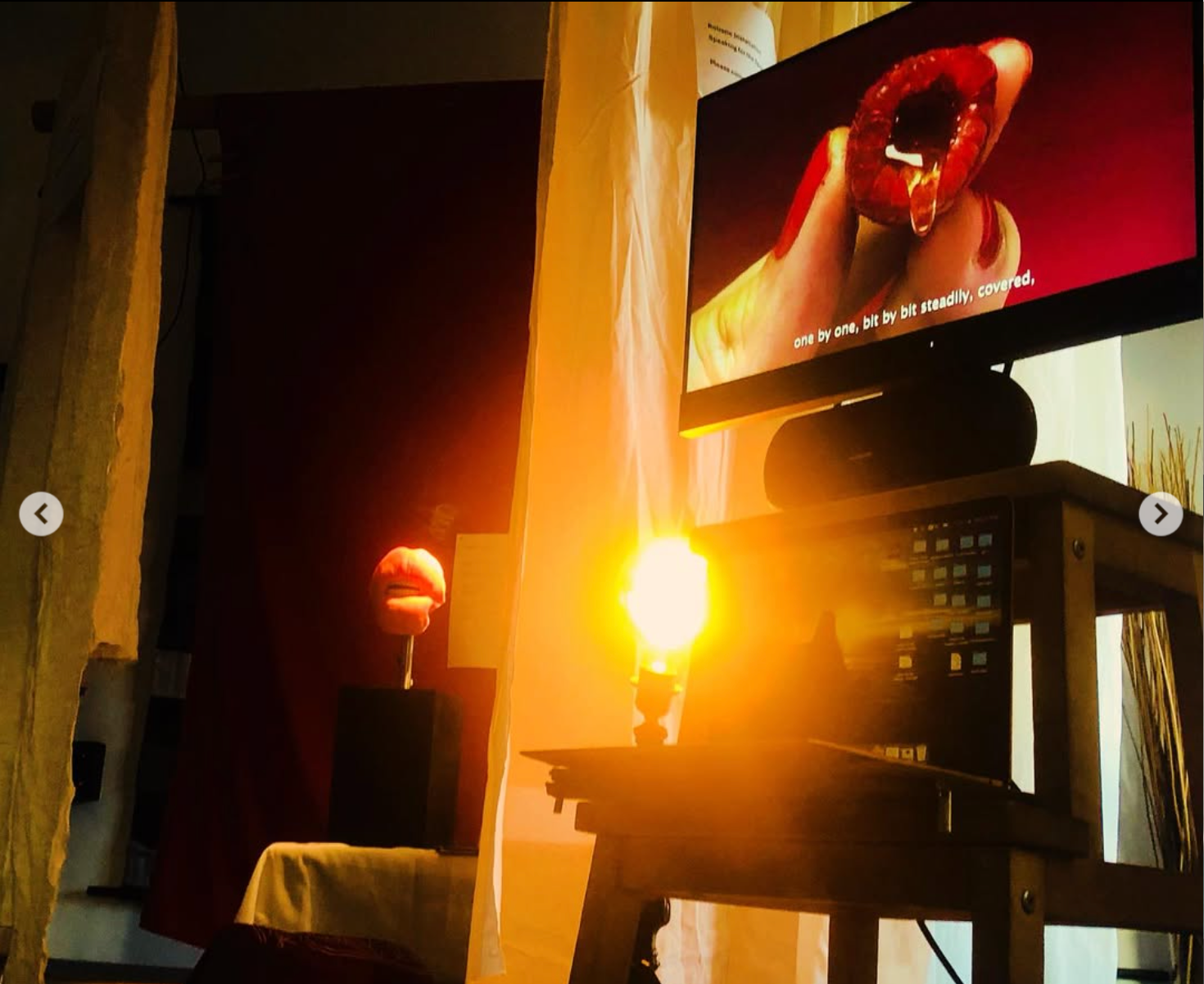


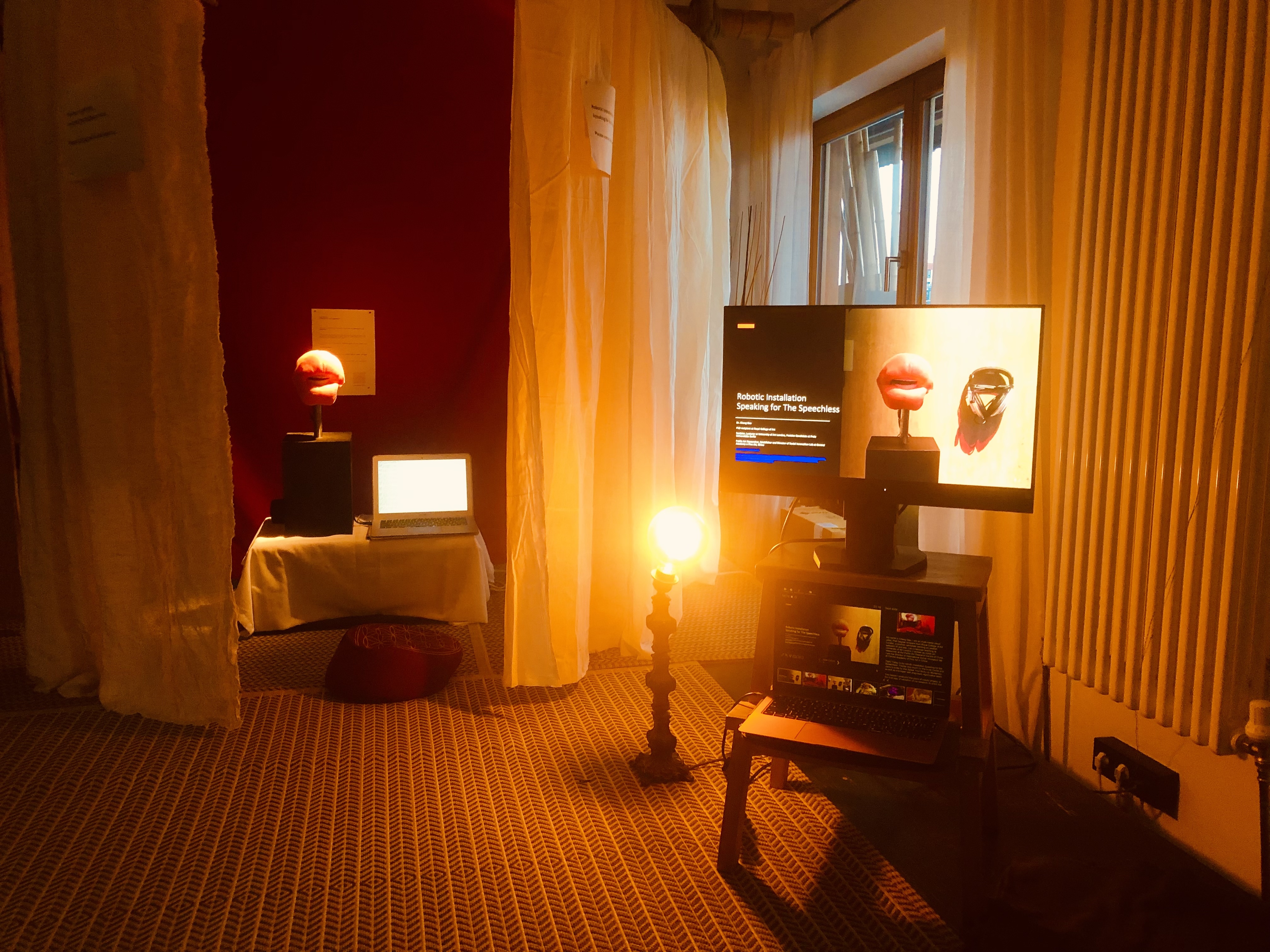
Sex and Desire as Subversive Force Combating Chinese Censorship
Robotic Installation: Speaking for the Speechless
June 8th, Saturday, 20:00–20:30
IKSK_ Institut für Körperforschung und Sexuelle Kultur
Holzmarkt 25 Haus 2, 4. Etage, 10243 Berlin, Germany
Lecture Performance by Dr. Chang Gao: “Sex and Desire as Subversive Force Combating Chinese Censorship”
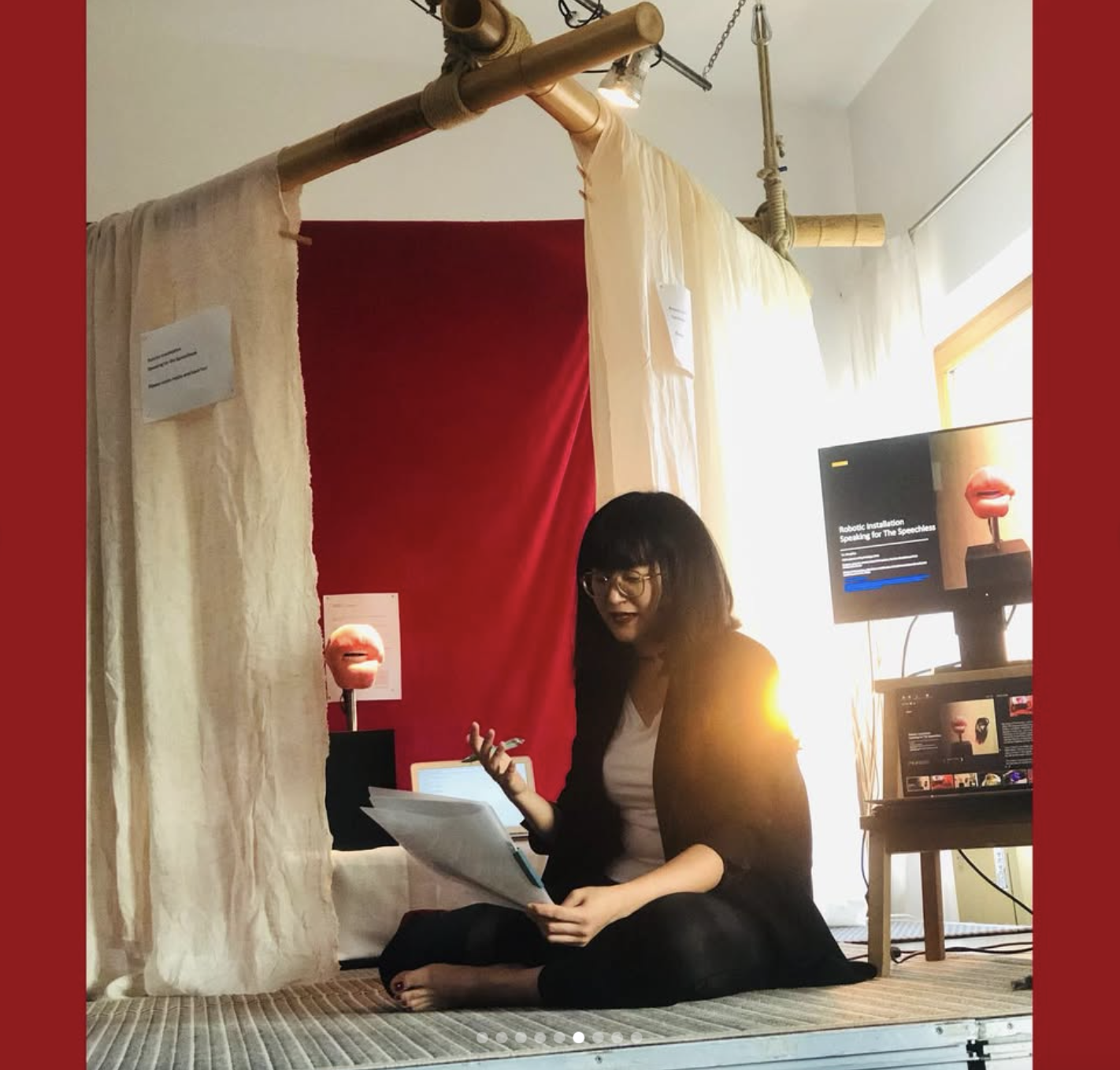
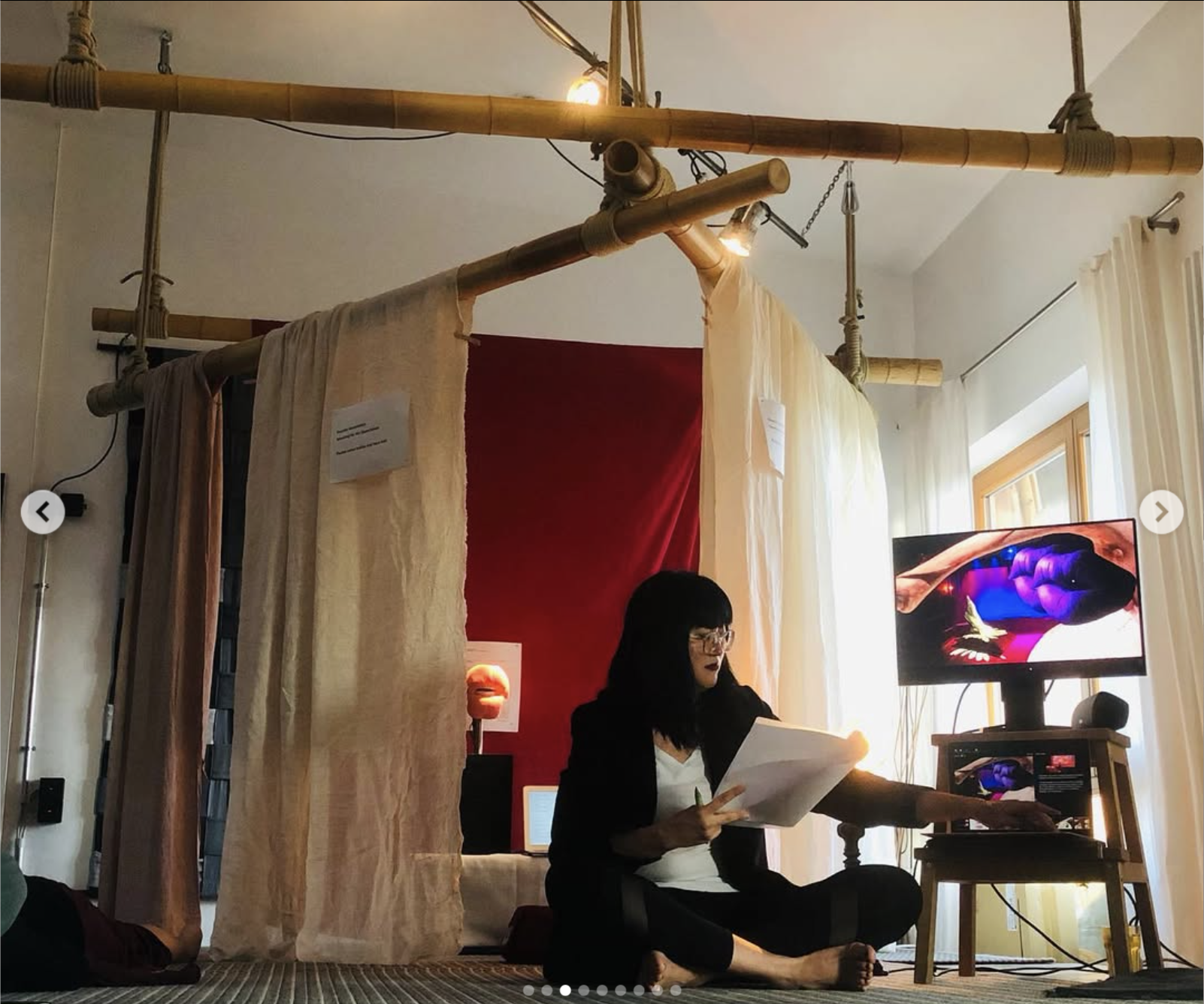
At the SPEAK YOUR BODY OUT festival, Dr. Chang Gao presented her lecture performance “Sex and Desire as Subversive Force Combating Chinese Censorship” alongside the interactive robotic installation Speaking for the Speechless, exhibited over the course of three days.
This work investigates how erotic expression and bodily desire can act as radical tools of resistance against authoritarian censorship regimes—particularly within China’s increasingly technologized landscape of control. Drawing on theories of affect, posthumanism, and embodied resistance, Gao’s installation offers a speculative interface where silenced voices are re-articulated through machinic presence.
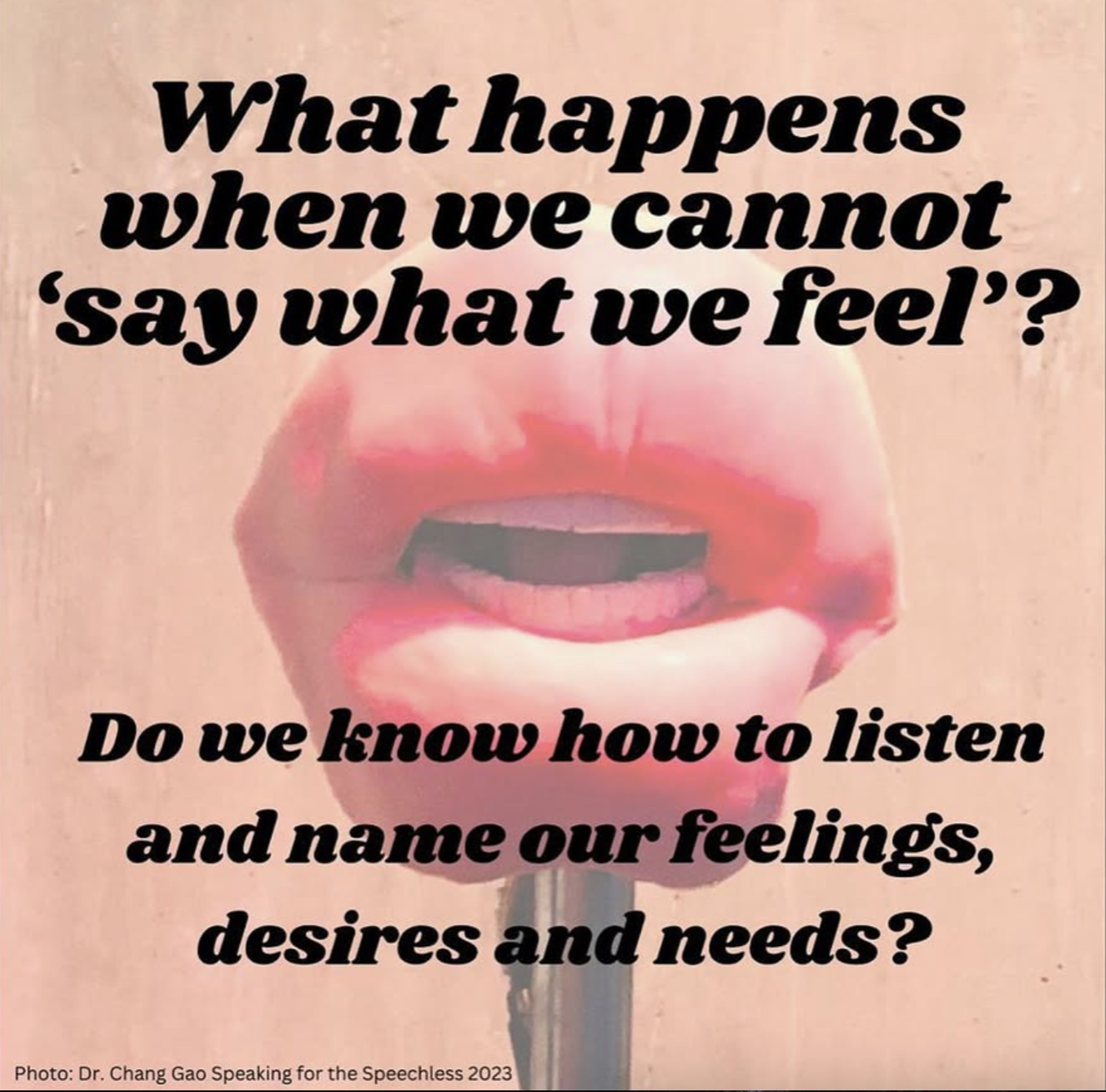
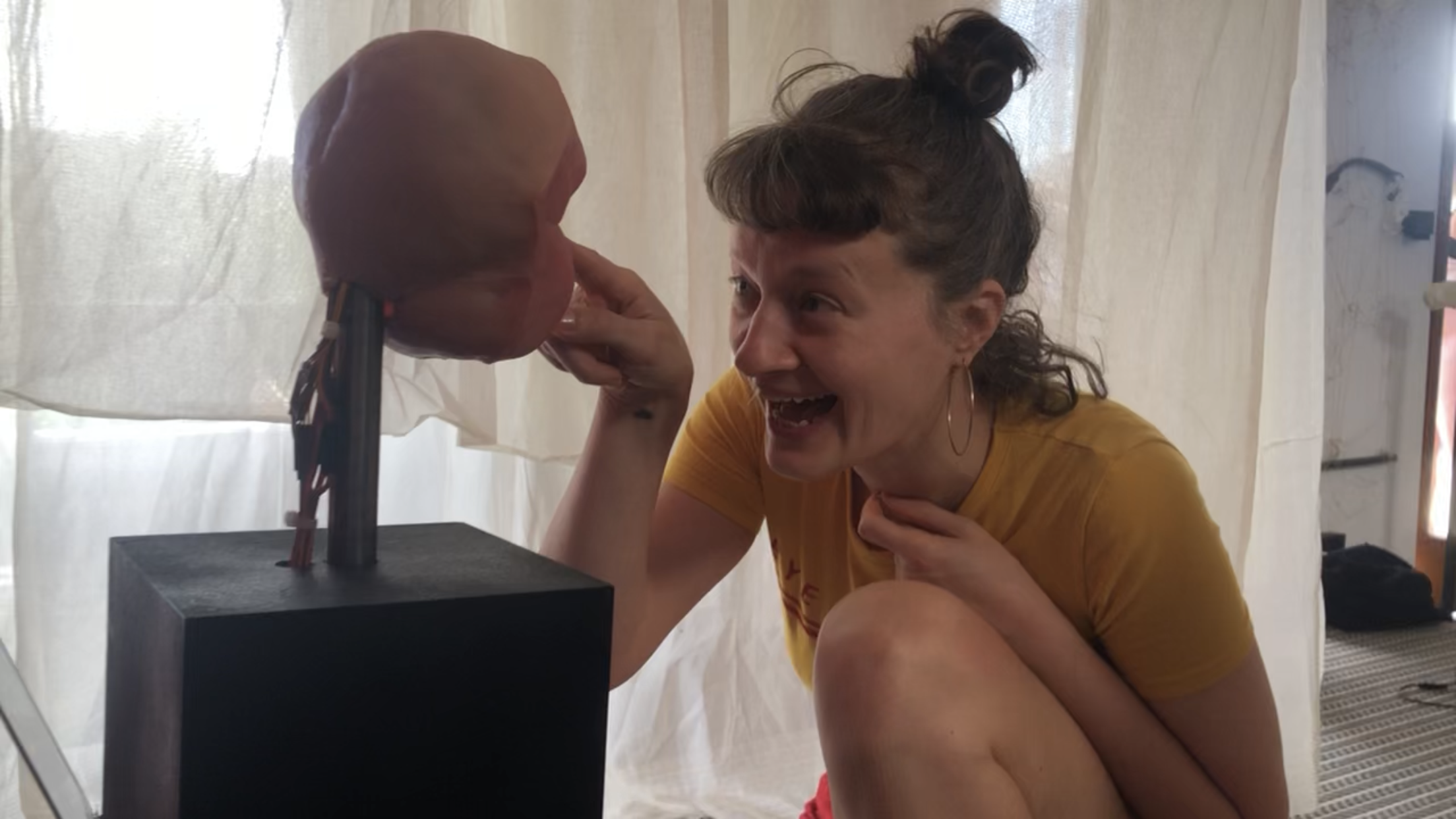
Speaking for the Speechless is a robotic sculpture designed to “speak” the unspeakable—giving mechanical voice to repressed political, erotic, and emotional expressions that are censored or rendered dangerous in oppressive societies. Visitors are invited to type their censored or silenced thoughts into a keyboard. In response, a robotic mouth articulates their statements out loud, transforming the act of speech into a shared defiance against state control and social repression.
Developed in exile, during a period of both physical recovery and political displacement, the installation reflects Gao’s personal experience navigating China’s censorship of sexuality, feminist thought, and dissident expression. By embedding desire and vulnerability into the robotic body, the work posits a politics of intimacy that resists erasure—not by shouting louder, but by creating new sensual circuits of articulation.
Through fragmented phonemes, broken rhythms, and mechanical gestures, the robotic mouth becomes a nonhuman agent of erotic resistance—offering speech not as perfected language, but as fractured, affective insistence. It asks: Can desire be political? Can sexuality be revolutionary? Can the robot become a lover, a dissident, or a witness to trauma?
The installation raises deeper questions about the future of sex, intimacy, and communication in an era of digital surveillance and AI governance. What forms of intimacy are possible when the body is absent? Can a mechanical or artificial system experience or express desire? And how might emerging technologies mediate or censor not only what we say—but what we long for?
These questions remain deliberately open as Gao continues her research into AI, sexuality, and the posthuman body. Her ongoing work speculates on new techno-erotic interfaces where desire itself becomes a language of resistance—one that cannot be easily filtered, flagged, or silenced.
The Speak Your Body Out festival provided a trauma-informed, body-positive context for this exploration—inviting participants to explore new languages of touch, consent, intimacy, and healing through somatic workshops, sound baths, and collective embodiment practices.
During a communal “cuddle puddle” session, Gao reached a transcendental calm that prompted further speculation: Is it possible to experience sex without skin? Intimacy without touch? Desire without a body? The robotic mouth, in its imperfect articulations, becomes a metaphor for these inquiries—gesturing toward an erotic future where voice is disembodied but not disempowered.
About the Artist
Dr. Chang Gao is a multimedia artist and postdoctoral researcher at the University of the Arts Berlin (UdK). She also serves as director of the Social Innovation Research Lab at the Central Academy of Fine Arts (CAFA) in China. Holding a PhD from the Royal College of Art (London), her work merges robotics, real-time AI, AR, bioelectric sensors, and sculpture to explore how bodily affect, sensuality, and multisensory interfaces can disrupt algorithmic norms and state-imposed silencing. Her internationally exhibited practice situates sex and desire as emancipatory forces—capable of confronting Chinese censorship, gendered repression, and technocapitalist reductionism alike.